Ten minutes, on the floor
Six exercises, two rounds, timed. Thirty seconds of work and twenty of rest at the easiest level, forty-five and ten at the hardest — about ten to eleven minutes either way.
Six exercises, two rounds, about ten minutes on the floor — timed work and rest, no equipment, no gym.
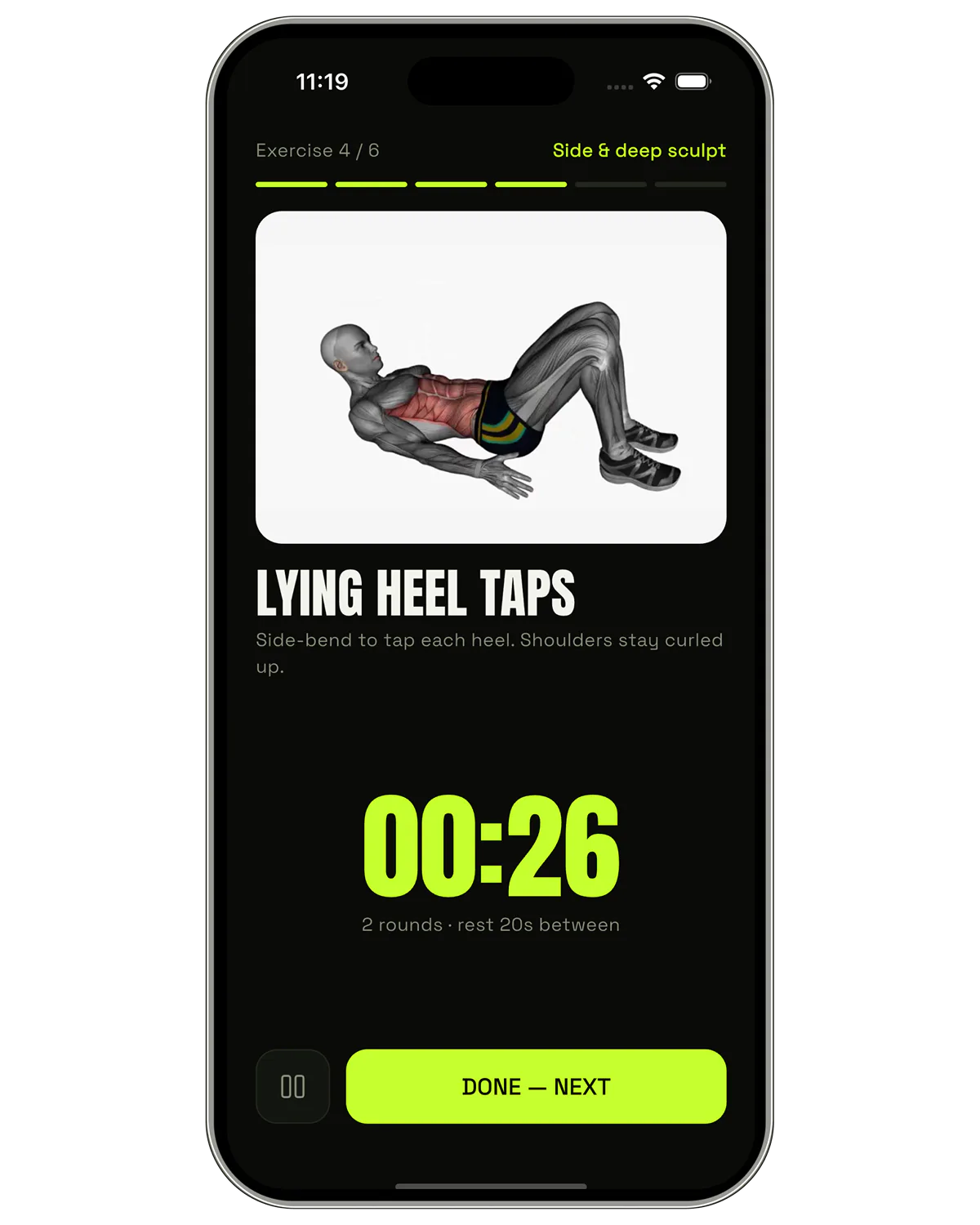
Six exercises, two rounds, timed. Thirty seconds of work and twenty of rest at the easiest level, forty-five and ten at the hardest — about ten to eleven minutes either way.
The level you set at the start caps which exercises can appear at all. A rookie never gets handed a dragon flag, and a machine never gets a session it can coast through.
Forty exercises in the catalogue and not one of them needs equipment. A mat is a comfort, not a requirement.
The plan prescribes rest, so the streak tolerates it: up to three days between two sessions keeps the chain alive. Only disappearing breaks it.
It is already built and it does not change if you close the app and come back. Six exercises, in an order picked to alternate the load.
Timed blocks with the exercise demo in front of you. Rest gives you a "+20s" if you need it and a skip if you do not, and shows what is coming next.
The session ends on your reps, your calories and your streak — then offers a ten-second photo for the timelapse, while the pump is still there.
Six exercises, performed twice, as a timed circuit. Every block is work then rest, with the demo of the movement in front of you and a “how to” sheet a tap away — including the part about what cheating the movement looks like.
The rest screen is deliberately useful rather than dead time: it names the next exercise, and it lets you add twenty seconds or skip ahead. Which one you press is the honest measure of the session.
Today’s workout is generated from your profile and the day, and it is stable: the same day gives you the same six exercises whether you open the app at 7am or at midnight. Nothing reshuffles because you did not like what you saw.
The level you picked at the start does the real work here. It caps how advanced an exercise can be and sets the work-to-rest ratio — a beginner gets thirty seconds on and twenty off, someone advanced gets forty-five on and ten off. The session is never made easier because you skipped yesterday.
It does not correct your form. Absly counts your session, not your technique — the camera only judges movement in the challenge, never during a workout. If an exercise hurts your back or your neck, the “how to” sheet is the limit of what the app can tell you.
It is also not a full-body program. These are abs sessions: they train the core and nothing else pretends otherwise.
About ten to eleven minutes. A session is six exercises done twice, with timed work and rest — thirty seconds of work and twenty of rest at the easiest level, forty-five and ten at the hardest. Recovery sessions run one round instead of two.
No. All forty exercises in the catalogue are bodyweight and floor-based, so the whole program runs in a bedroom. A mat makes the floor kinder to your spine, but nothing in the plan requires one.
Not by itself. The streak counts workouts done in a row rather than consecutive calendar days, and tolerates up to three days between two sessions — a weekend off is fine. On a daily plan the tolerance drops to one day.
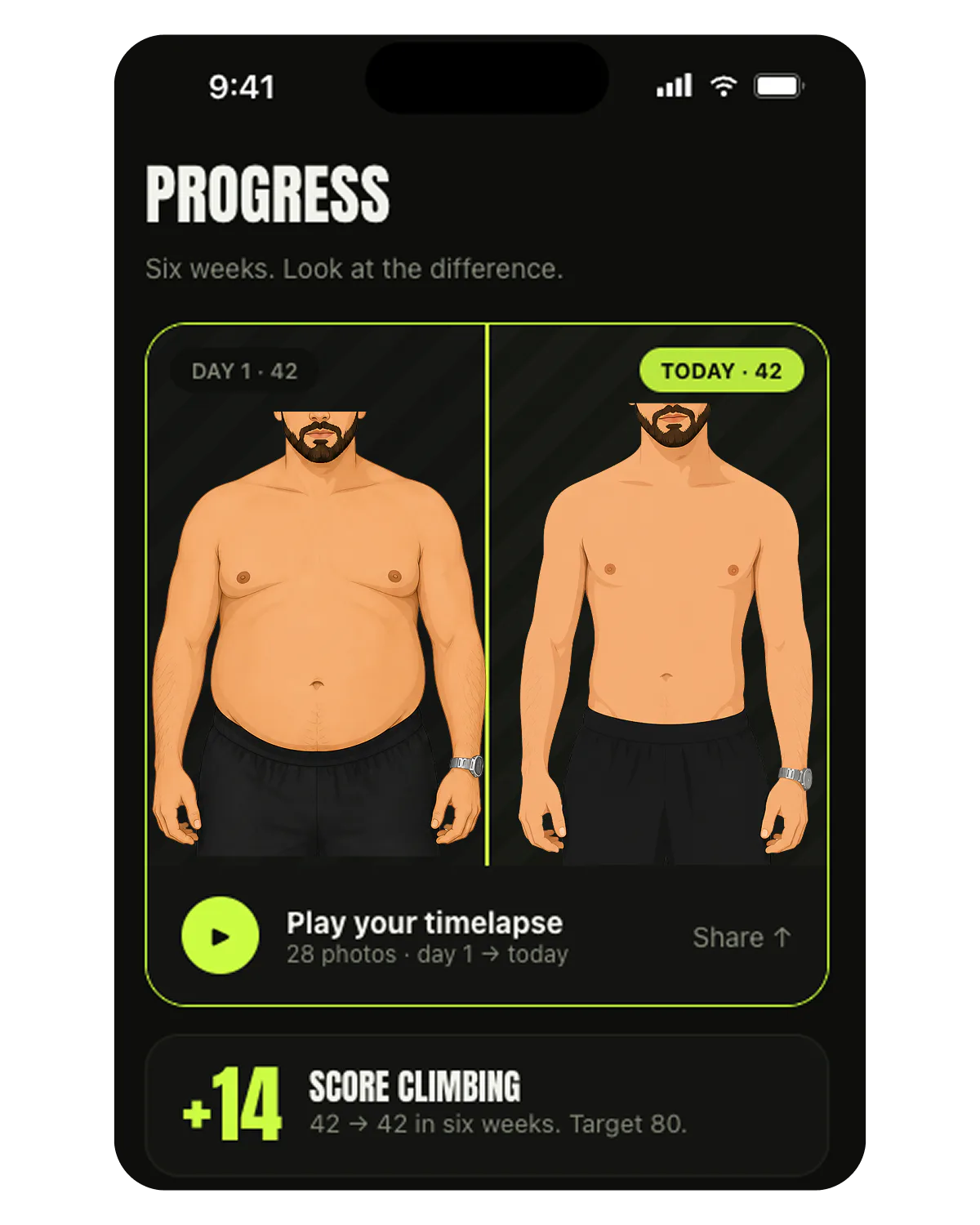
One photo after each workout, day 1 to today, in one swipe — stored on your phone and uploaded nowhere.
See how it works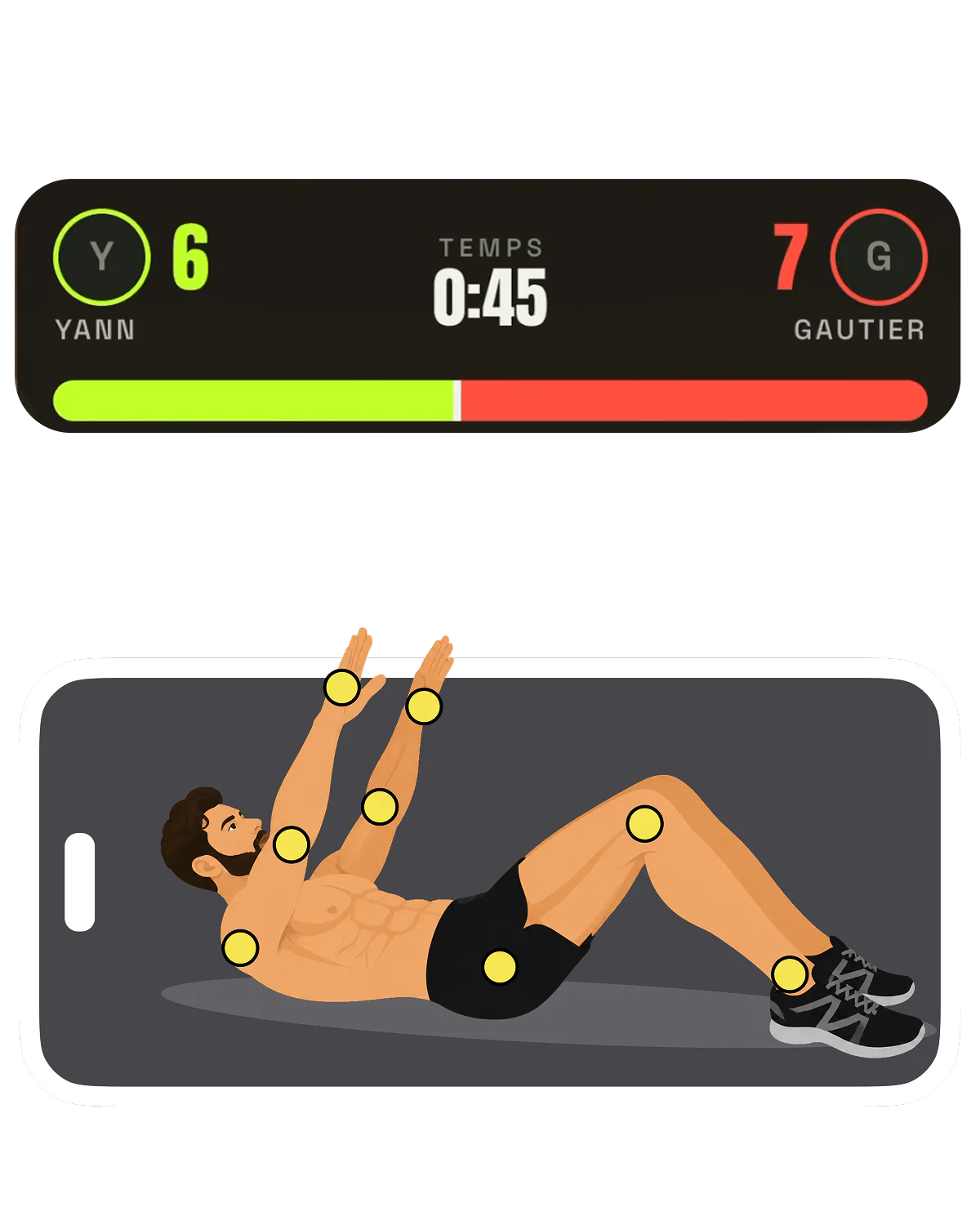
Max crunches in 60 seconds, counted by the camera and not by you — half reps are rejected, and the top 100 board says where you stand.
See how it works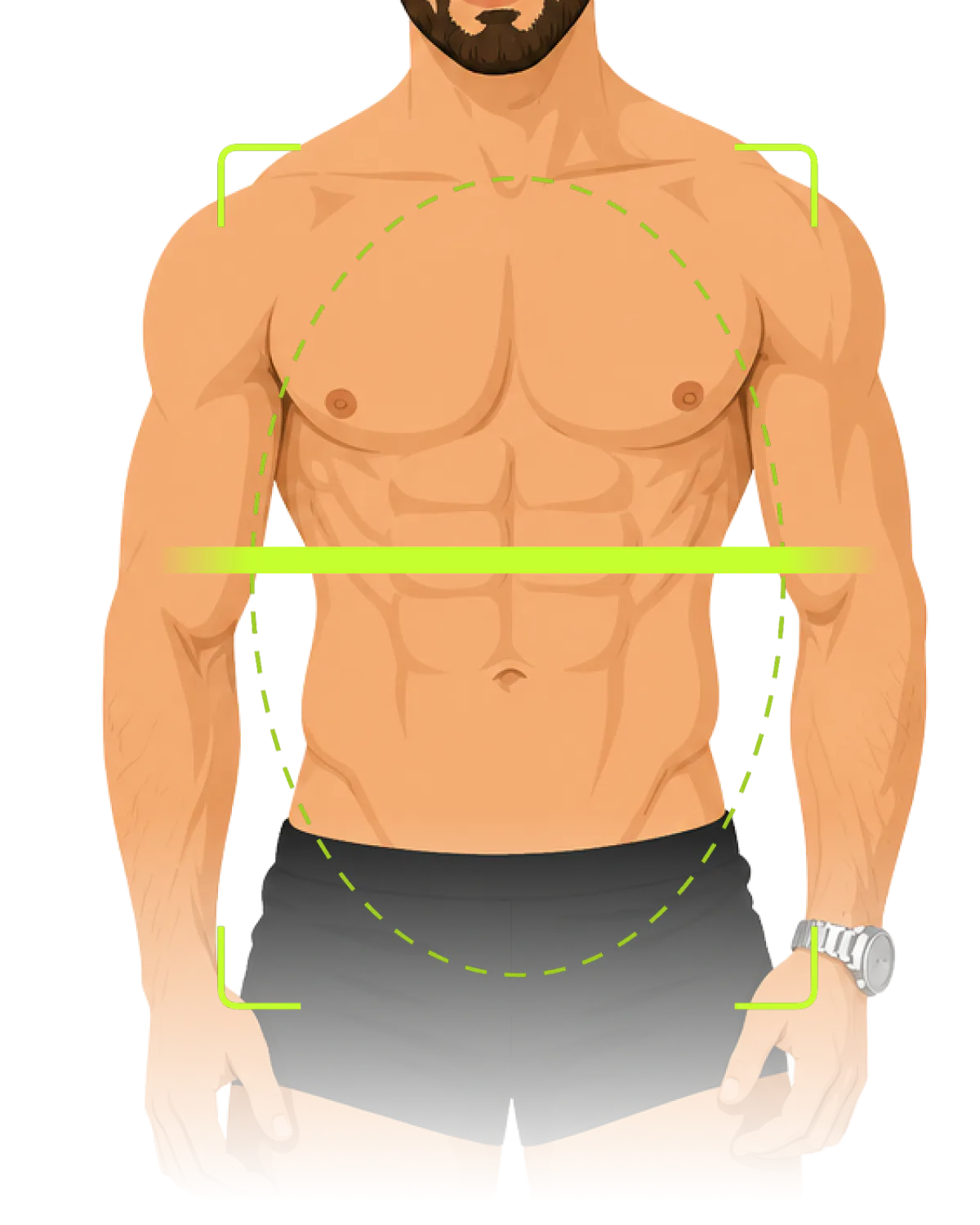
90 seconds of camera time becomes one number on a 0-100 scale — the same number whether you like it or not.
See how it worksAbsly estimates how visible your abdominal definition is from a photo. It is not a body-fat measurement, it is not a medical device, and it is not a substitute for advice from a doctor or a registered dietitian.