One number, not a vibe
The scan returns an Abs Score between 0 and 100. A score that flattered you would be worthless, so this one does not.
90 seconds of camera time becomes one number on a 0-100 scale — the same number whether you like it or not.
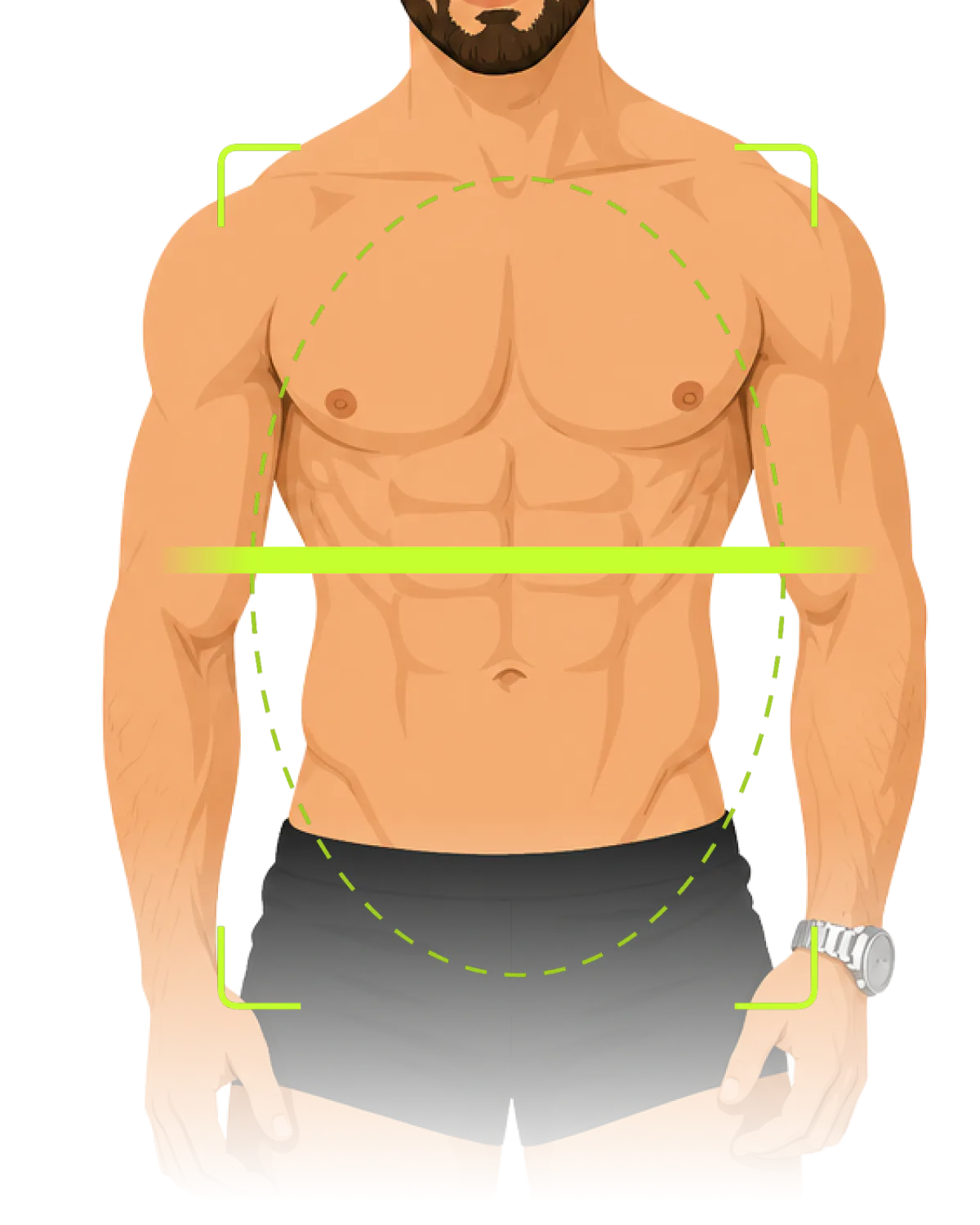
The scan returns an Abs Score between 0 and 100. A score that flattered you would be worthless, so this one does not.
A phone camera is the whole kit. No calipers, no impedance scale, no appointment, and the rescan costs exactly what the first scan cost.
Every scan lands on the same scale, so two of them can be subtracted. That difference is the only honest evidence that eight weeks of work moved anything.
The score estimates how visible your abdominal definition is from a photo. It is not a body-fat percentage, and a camera cannot see visceral fat.
Point the camera at your stomach and hold still for about 90 seconds. Same light and same distance each time is what keeps two scans comparable.
Absly returns one number on a 0-100 scale, plus where it sits against your previous scans.
Come back after a few weeks of training. The trend line between scans is what tells you the truth — the mirror flatters on a good day and lies on a bad one.
The scan reads one thing: how visible your abdominal definition is in the photo it just took. It returns an Abs Score between 0 and 100, and that score is the only output — there is no body composition breakdown behind it, because a phone camera has no way to produce one honestly.
That narrowness is the point. A number that only estimates what a camera can actually see is a number you can check against the mirror, and one you can subtract from the last one.
A report is easy to write and impossible to act on. A single score has one property a report does not: it can be compared with itself. Scan today, train, scan again in three weeks, and the difference between the two is a measurement rather than an impression.
The cost of that choice is real. The scan will not tell you your body fat percentage, your lean mass, or anything about visceral fat. If those are the numbers you need, an impedance device or a DEXA scan is the right tool and this is not it.
The Abs Score is not a diagnosis, and Absly is not a medical device. The scan cannot see beneath the surface, it does not detect any condition, and it should not be used to make decisions about your health, your weight or your eating. For those, talk to a doctor or a registered dietitian.
Keep the conditions boring and the trend gets sharper:
No. The Abs Score estimates how visible your abdominal definition is in a photo, on a 0-100 scale. Body fat percentage is a different measurement and needs a different tool — an impedance scale, calipers or a DEXA scan. The two move together, but they are not the same number.
Every two to four weeks. Visible definition changes slowly, so scanning daily mostly measures light, hydration and camera angle rather than progress. A scan every fortnight gives you a trend line with enough distance between points to read.
Keeping the conditions boring. Same light, same time of day, same distance, same posture. The score reads a photo, so anything that changes the photo changes the score — which is why the app asks you to hold still for the full 90 seconds.
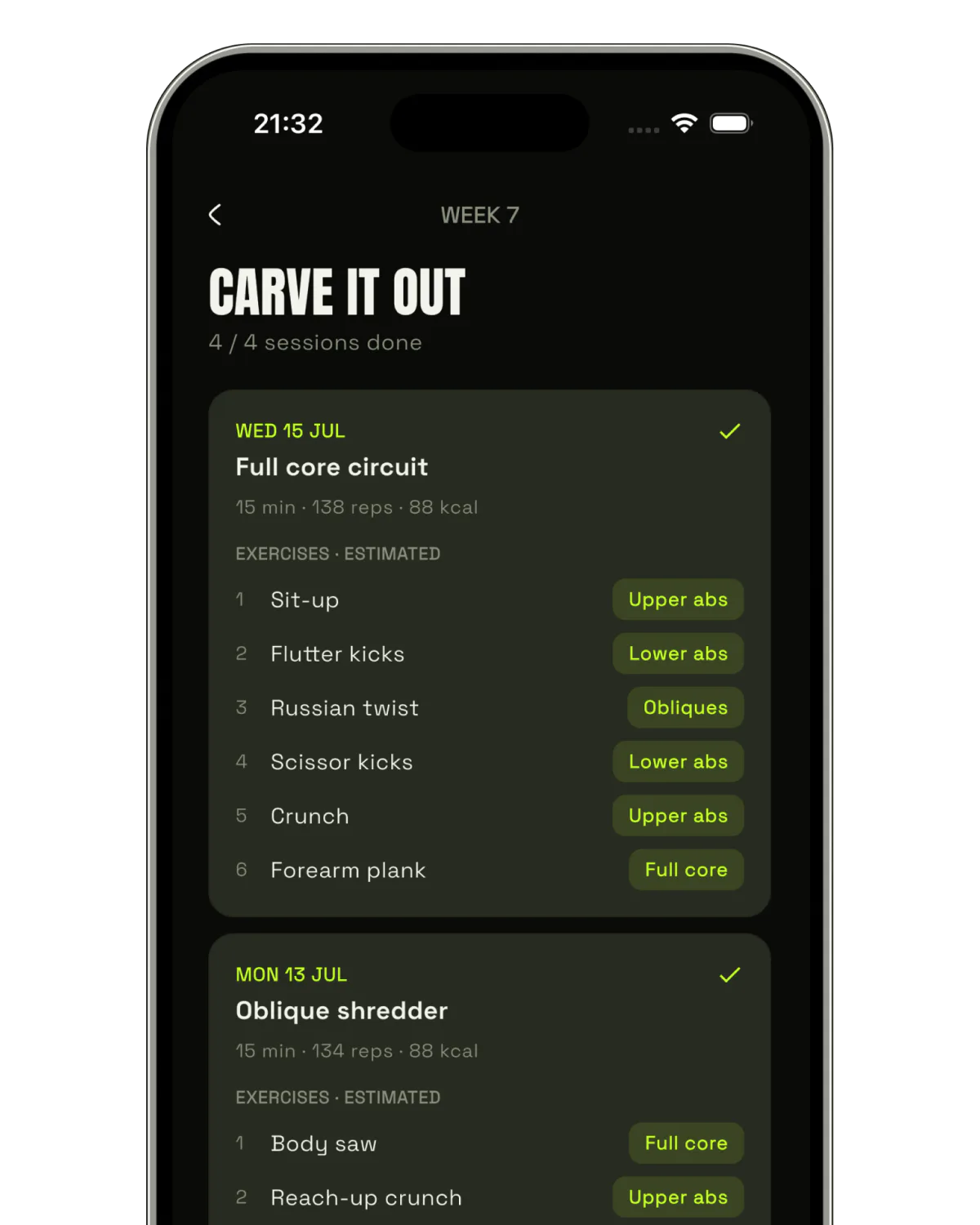
Three phases — wake the core, build the grid, carve it out — over 4, 8 or 12 weeks, at 3 to 7 sessions a week.
See how it works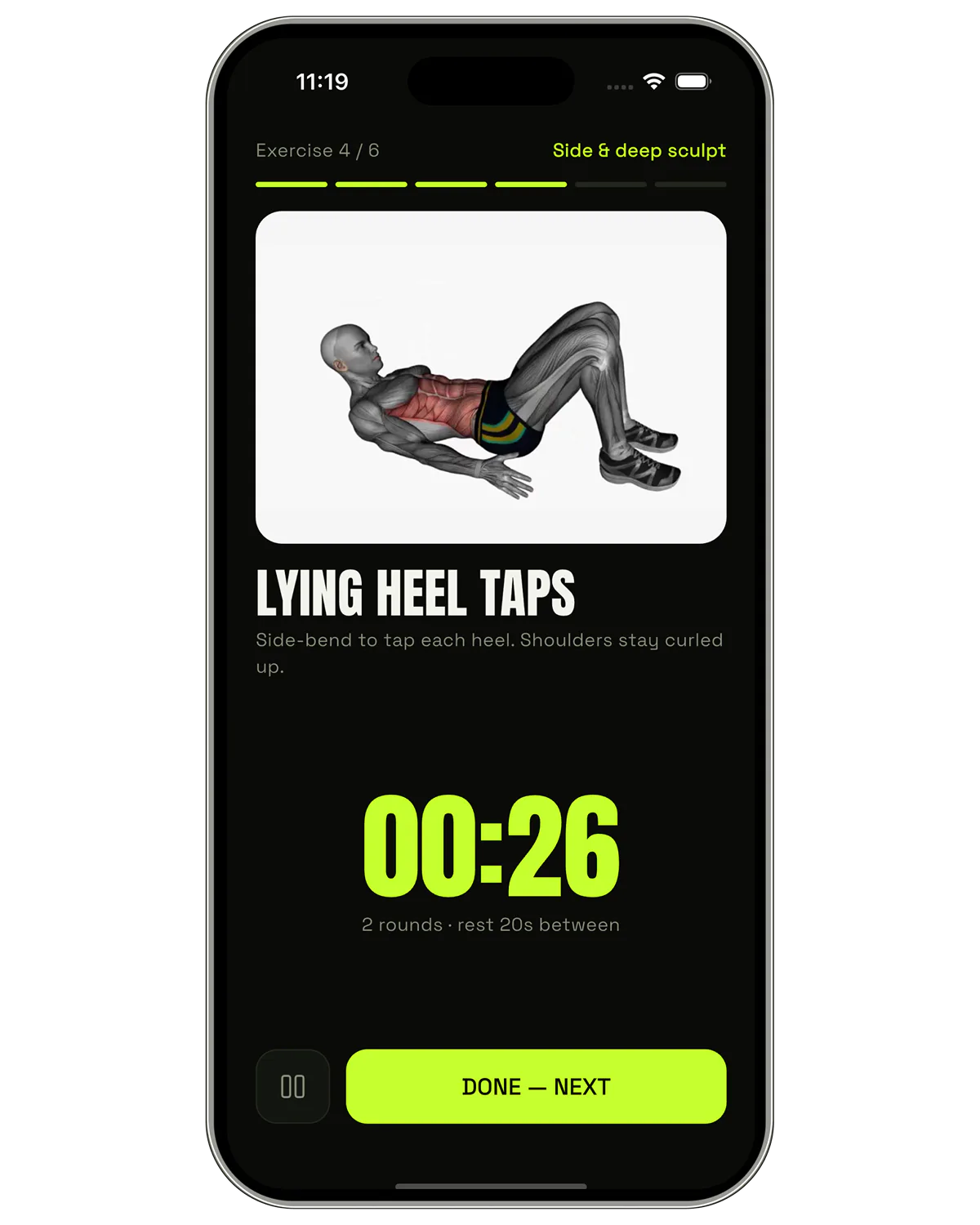
Six exercises, two rounds, about ten minutes on the floor — timed work and rest, no equipment, no gym.
See how it works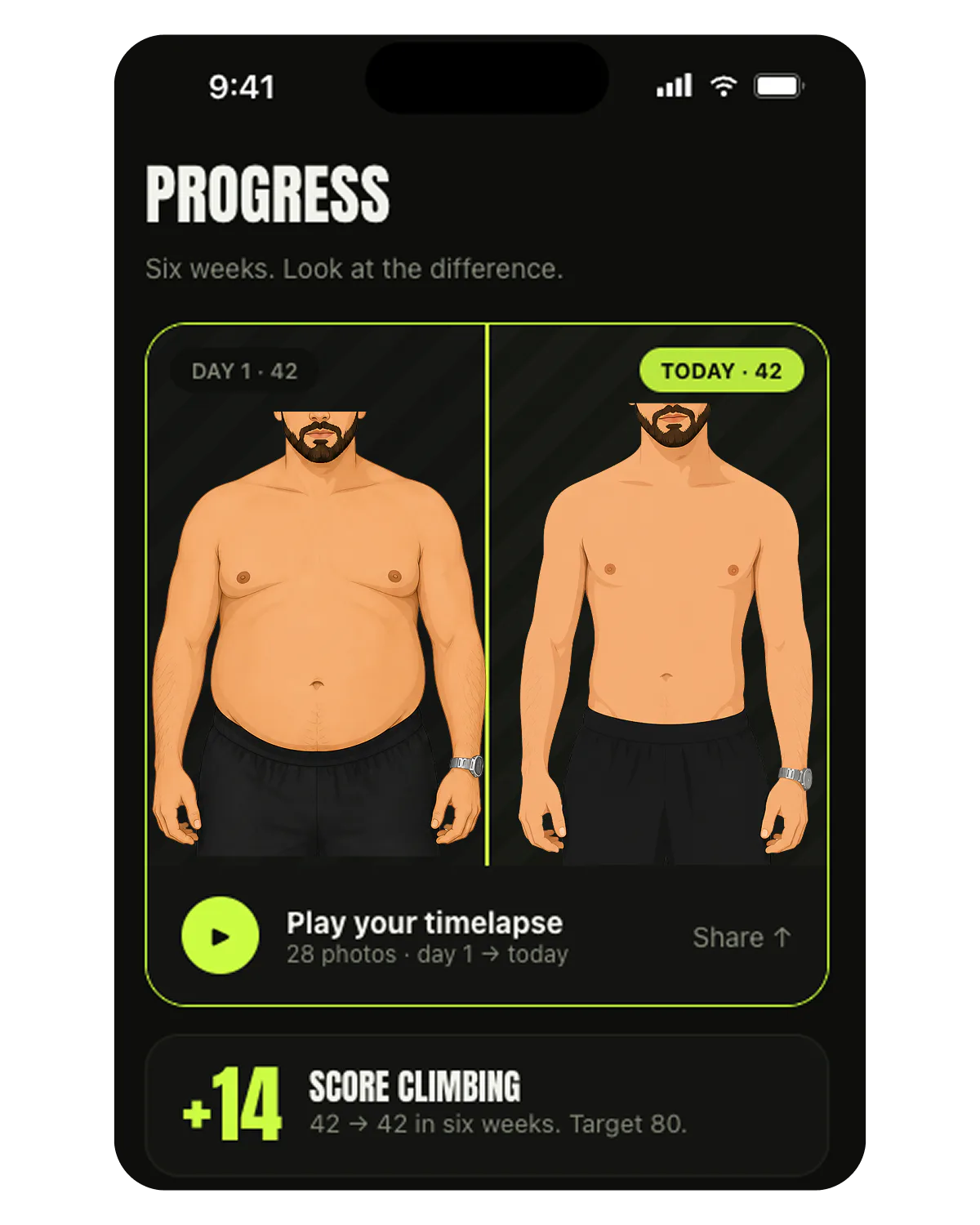
One photo after each workout, day 1 to today, in one swipe — stored on your phone and uploaded nowhere.
See how it worksAbsly estimates how visible your abdominal definition is from a photo. It is not a body-fat measurement, it is not a medical device, and it is not a substitute for advice from a doctor or a registered dietitian.