The camera counts, you do not
Your phone watches the movement with Apple’s on-device body pose engine and counts the reps itself. No tapping, no honour system, no round numbers.
Max crunches in 60 seconds, counted by the camera and not by you — half reps are rejected, and the top 100 board says where you stand.
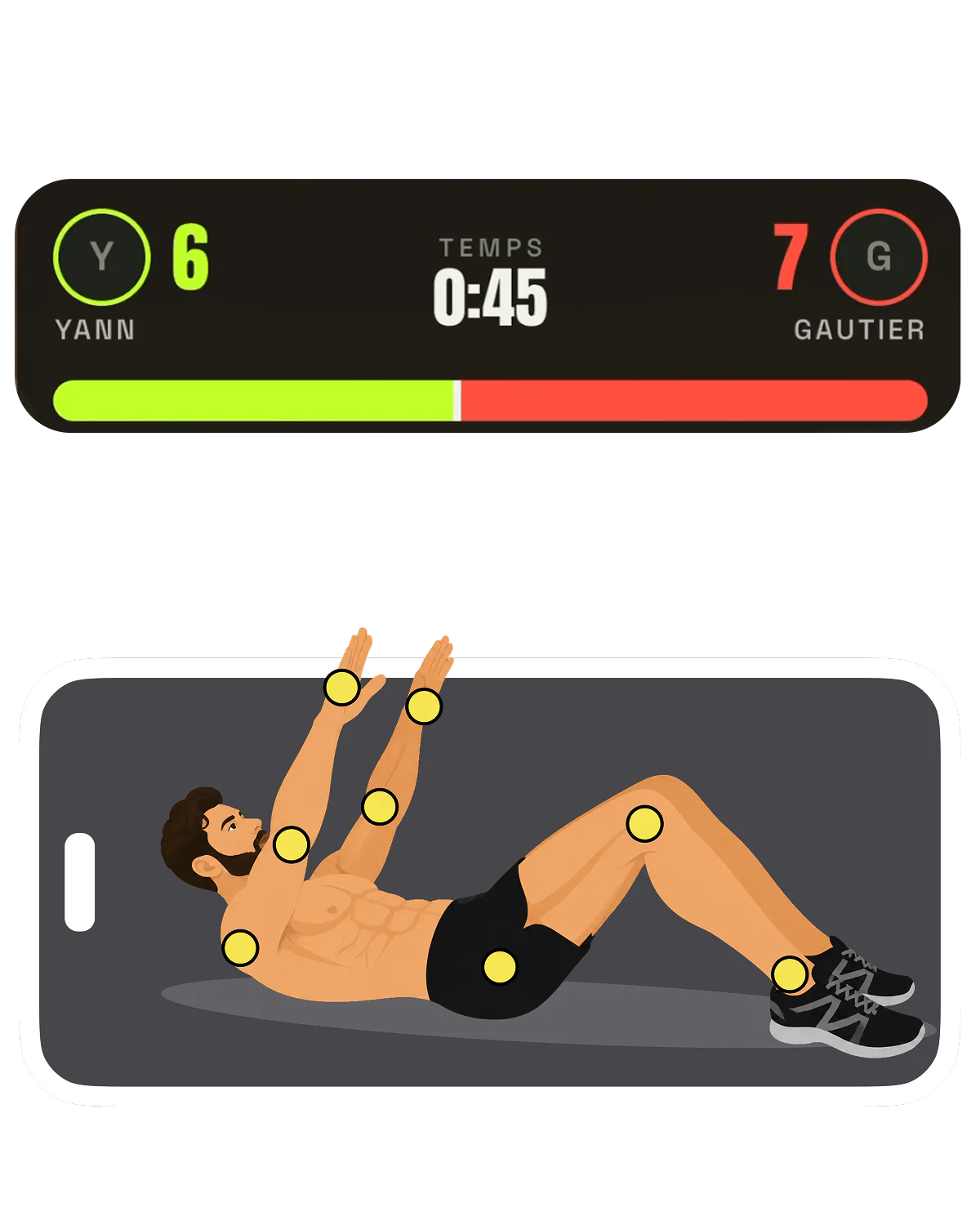
Your phone watches the movement with Apple’s on-device body pose engine and counts the reps itself. No tapping, no honour system, no round numbers.
A rep is rejected when the range is short, the tempo is too fast to control, the phone moved or you drifted out of frame — and the result tells you which one it was.
Top 100 per movement, over 30 days or all time, with your rank stated plainly. Tap a row and their run replays live against yours, rep for rep, until one of you stops.
Only the crunch is live. Sit-ups, leg raises and reverse crunches are built but switched off until each counter is validated against real runs — a counter that quietly misses reps is worse than no counter.
On its side, at hip height, about 1.2 m away, framing you from knees to head. The app tells you when you are too close, too far or off centre.
Pick the 60-second format, or MAX, which has no time limit and ends three seconds after your last rep.
Validated reps, rejected reps, your form, and where the run puts you on the board. Then share the card if the number is worth showing.
One movement, one set, counted by your phone. You prop the device on its side about a metre away, start the run, and the camera counts the reps it can actually see. At the end you get validated reps, rejected reps, your personal best and your position on a top 100 board.
Two formats: sixty seconds, or MAX — no clock, and the run ends three seconds after your last rep. MAX is the honest one.
Or you skip the board and go straight at someone on it. Tapping a row starts a duel: their run replays live against yours, rep for rep, and the screen ends on victory, defeat or draw with the exact gap. Scores recorded before live replay existed are played back at an estimated pace, and the app tells you so rather than pretending the ghost is exact.
Any app can count taps. The interesting number is the one you cannot inflate: the counter throws away reps whose range is short, whose tempo is uncontrolled, or that happened while the phone slid or you left the frame. That is why two runs of “forty” are comparable — they were judged by the same referee.
It also means your first run will probably score lower than you expect. That is the counter working, not failing.
It does not coach your form. Rejecting a rep tells you the movement was incomplete, not how to fix your technique — and outside the challenge, during a normal workout, nothing is watching at all.
Only the crunch is offered today. Three more movements are implemented and switched off until their counters have been validated against real runs on real devices, because a counter that silently misses reps is worse than no counter. And none of this runs on Android yet.
Your phone camera tracks your body position with Apple’s on-device pose engine and counts a rep only when the movement completes its range at a controlled tempo. Nothing is typed in and nothing is estimated from a timer — a rep the camera cannot see does not exist.
Four reasons, and the result screen names the one that applied: the range was incomplete, the tempo was too fast to control, the phone moved during the set, or you drifted out of frame. Fixing the setup usually fixes the rejections.
Yes. Tap any row on the leaderboard and their run replays live against yours — their reps appear as they happened, next to yours, and the result names the winner and the gap. Older scores recorded before live replay show an estimated pace, and the app says so on screen.
Not yet. Rep counting runs on Apple’s on-device body pose engine, so the feature ships on iOS first. The Android version is on its way, and the leaderboard is waiting for it.
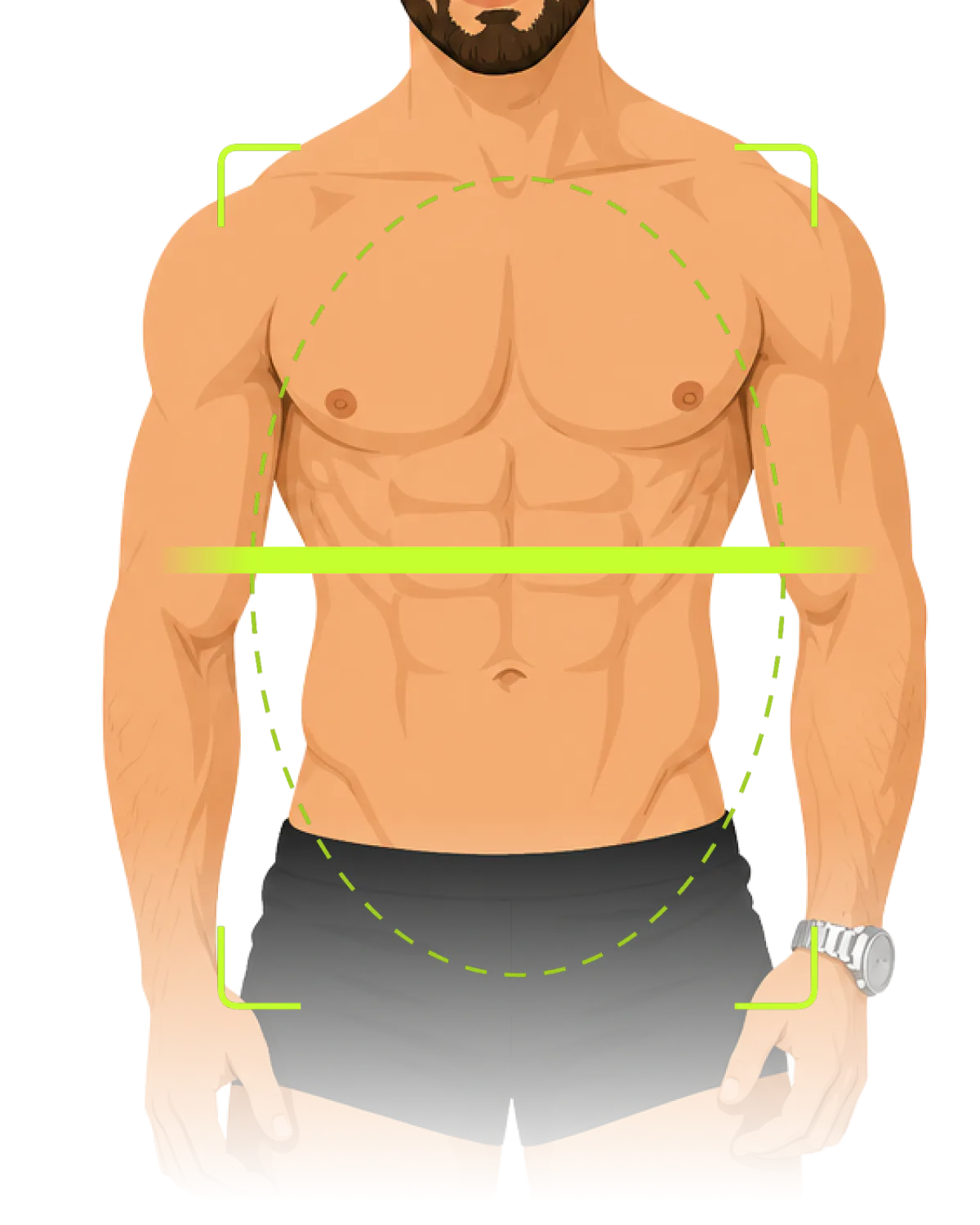
90 seconds of camera time becomes one number on a 0-100 scale — the same number whether you like it or not.
See how it works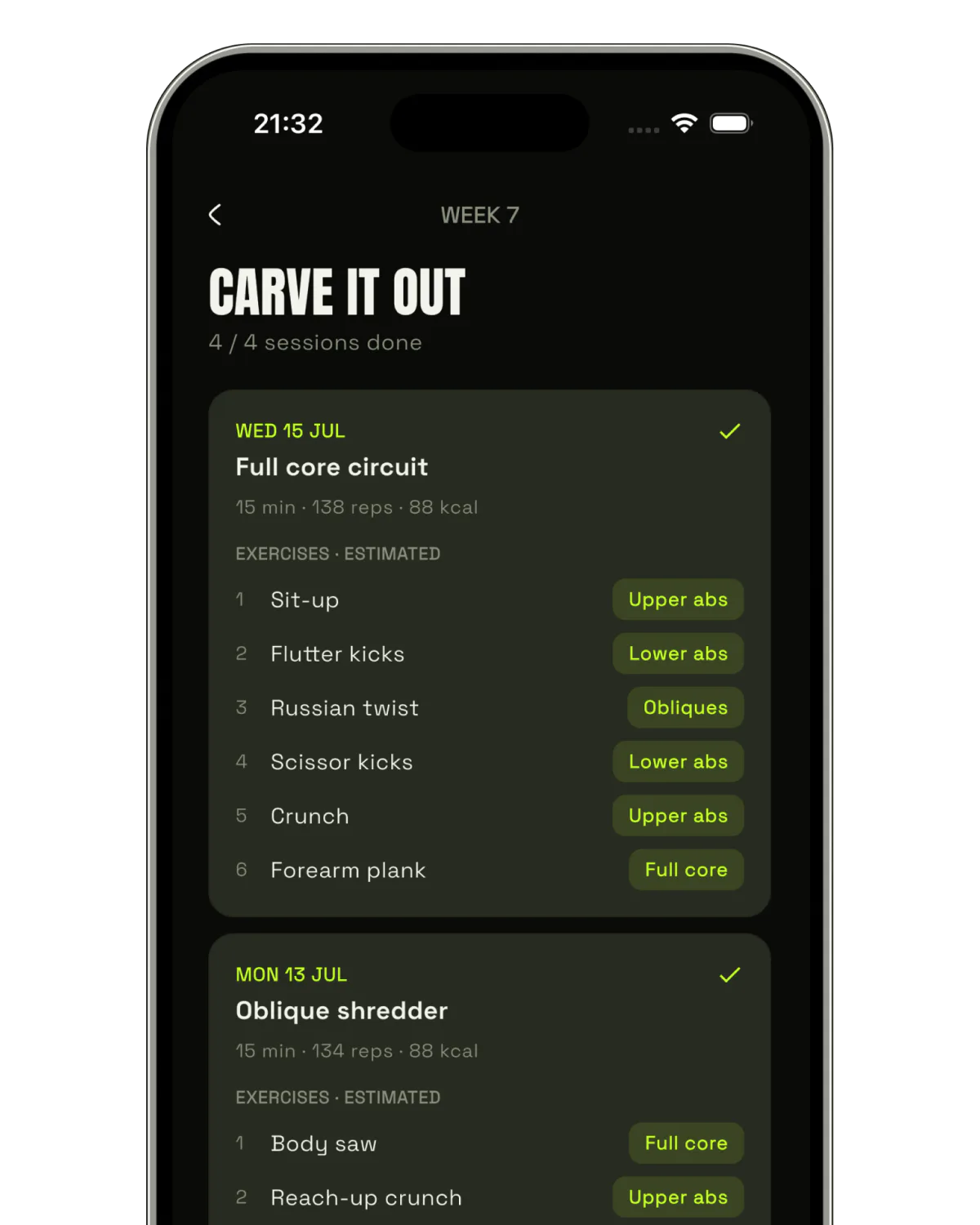
Three phases — wake the core, build the grid, carve it out — over 4, 8 or 12 weeks, at 3 to 7 sessions a week.
See how it works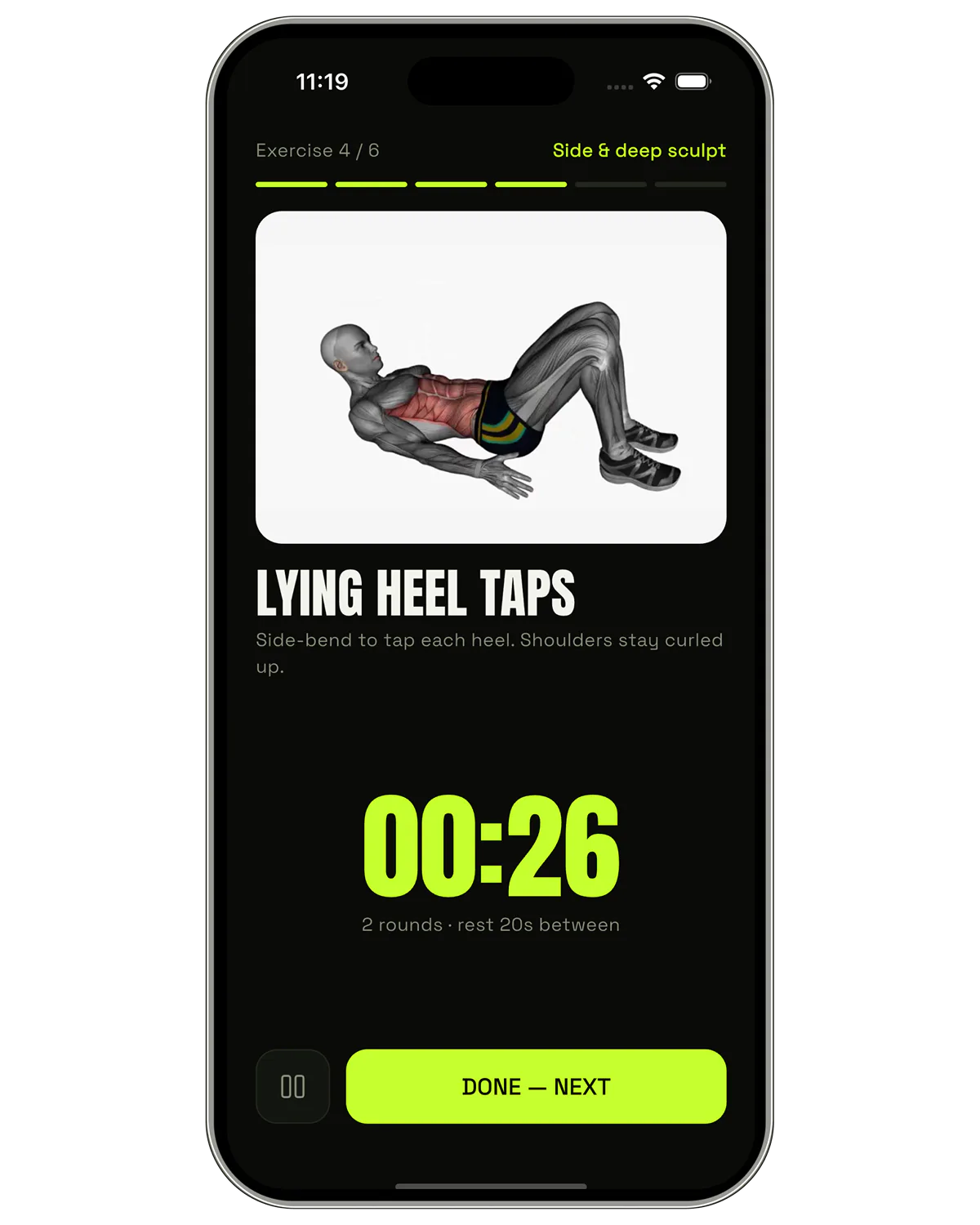
Six exercises, two rounds, about ten minutes on the floor — timed work and rest, no equipment, no gym.
See how it worksAbsly estimates how visible your abdominal definition is from a photo. It is not a body-fat measurement, it is not a medical device, and it is not a substitute for advice from a doctor or a registered dietitian.