Three phases, in order
Wake the core (planks, dead bugs, hollow holds), build the grid (weighted crunches, leg raises, V-ups), then carve it out (circuits, dragon flags). On an 8-week plan that is weeks 1-2, 3-5 and 6-8.
Three phases — wake the core, build the grid, carve it out — over 4, 8 or 12 weeks, at 3 to 7 sessions a week.
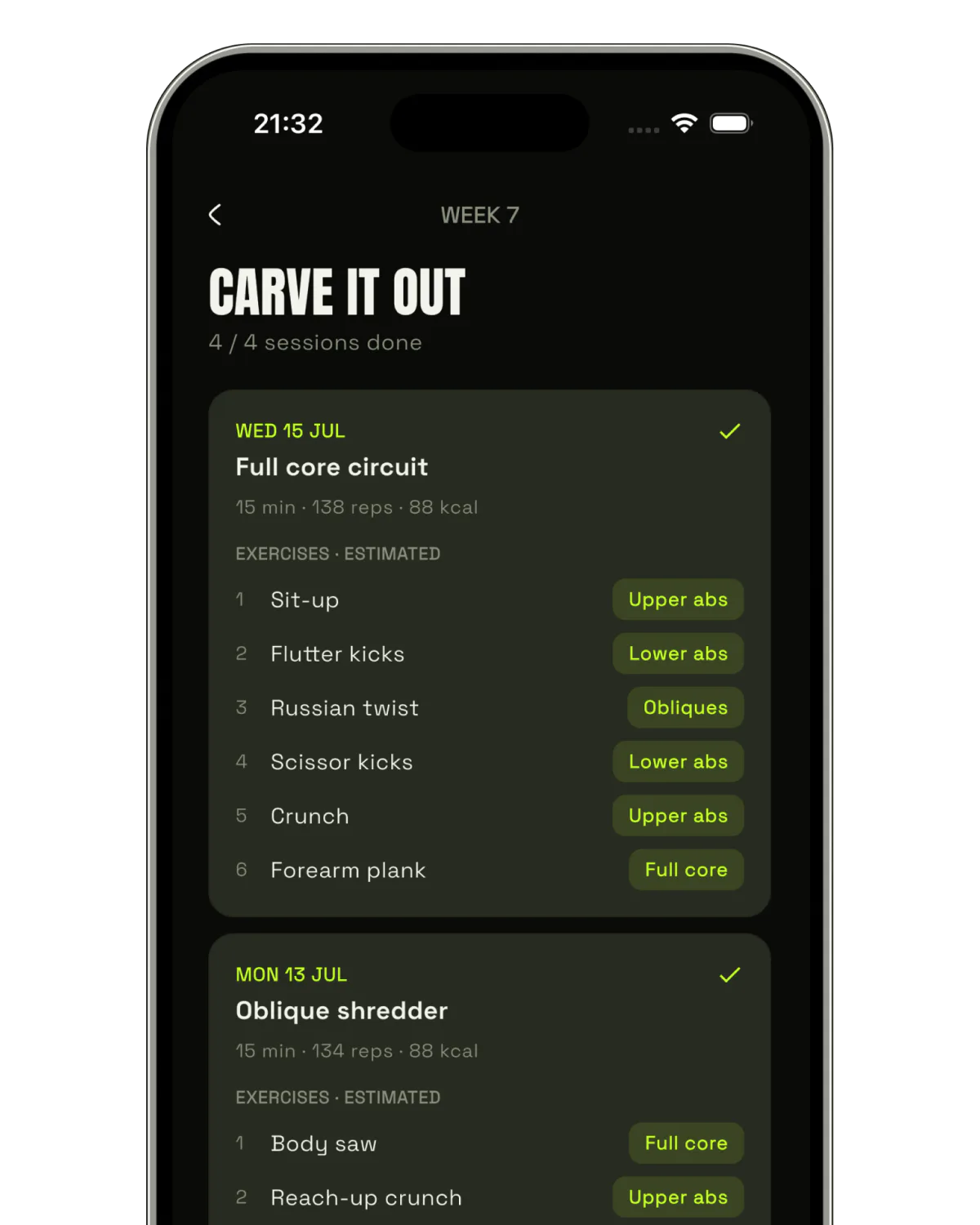
Wake the core (planks, dead bugs, hollow holds), build the grid (weighted crunches, leg raises, V-ups), then carve it out (circuits, dragon flags). On an 8-week plan that is weeks 1-2, 3-5 and 6-8.
Four, eight or twelve weeks, at three, four, five or seven sessions a week. The three phases stretch to fit whatever you picked.
Every week card shows sessions done against sessions planned, and a past week opens on what you actually did — exercises included. Phases you have not reached stay locked.
The sessions come from the goal, level and frequency you set at the start. Your Abs Score does not rewrite them — it is the measurement that says whether they worked.
Four, eight or twelve weeks, and how many sessions a week you can realistically hold. Both are yours to choose, and both can be reset with a new plan.
The plan hands you one session at a time and counts it against the week. Rest days are part of the plan, not a failure of it.
The last phase ends with a rescan. Two numbers, weeks apart, on the same scale — that difference is the whole point of the program.
The plan is a fixed curriculum in three phases, not a daily surprise. Phase one wakes the core with holds — planks, dead bugs, hollow holds. Phase two builds the grid with loaded work — weighted crunches, leg raises, V-ups. Phase three carves it out with circuits and dragon flags, and ends on a rescan.
Everything is timed work on the floor. There is no equipment in any phase, which is a constraint the exercise catalogue was built around rather than a compromise made later.
An ab program that changes every day feels productive and teaches nothing. Holds before load, load before circuits: the order exists because the second phase is unsafe or useless without the first, and the third is just noise without the second.
Locking the phases ahead is part of that. You can see what is coming — the plan screen shows every phase — but you cannot skip into it.
The plan does not rewrite itself from your Abs Score. The score measures how visible your definition is; the sessions come from the goal, level and training frequency you set when you started. Those two things meet at the end of the program, when the rescan says whether the work moved the number.
The one place difficulty does move on its own is the restart: when you begin a new plan, Absly suggests a level from your longest plank and from how much of the last plan you completed. It is a suggestion, it happens between plans rather than inside one, and it reads your training — not your score.
It is also not a nutrition plan, and visible abs are decided as much in the kitchen as on the mat. Absly does not tell you what to eat, and anyone claiming a mat alone will get you there is selling something.
You choose: four, eight or twelve weeks, with eight as the default. The three phases scale to the length you pick — roughly a quarter of the weeks on the first phase and the rest split between the other two. Eight weeks gives weeks 1-2, 3-5 and 6-8.
Nothing is deleted. The week card keeps showing sessions done against sessions planned, so a missed one is visible rather than erased. Rest days between sessions are expected — the plan is three to seven sessions a week, not seven.
Yes, and the app suggests a difficulty for the next one — from your longest plank and the share of sessions you actually completed, never from your Abs Score. You still pick the level, the length and the frequency yourself. History, photos and scans are untouched.
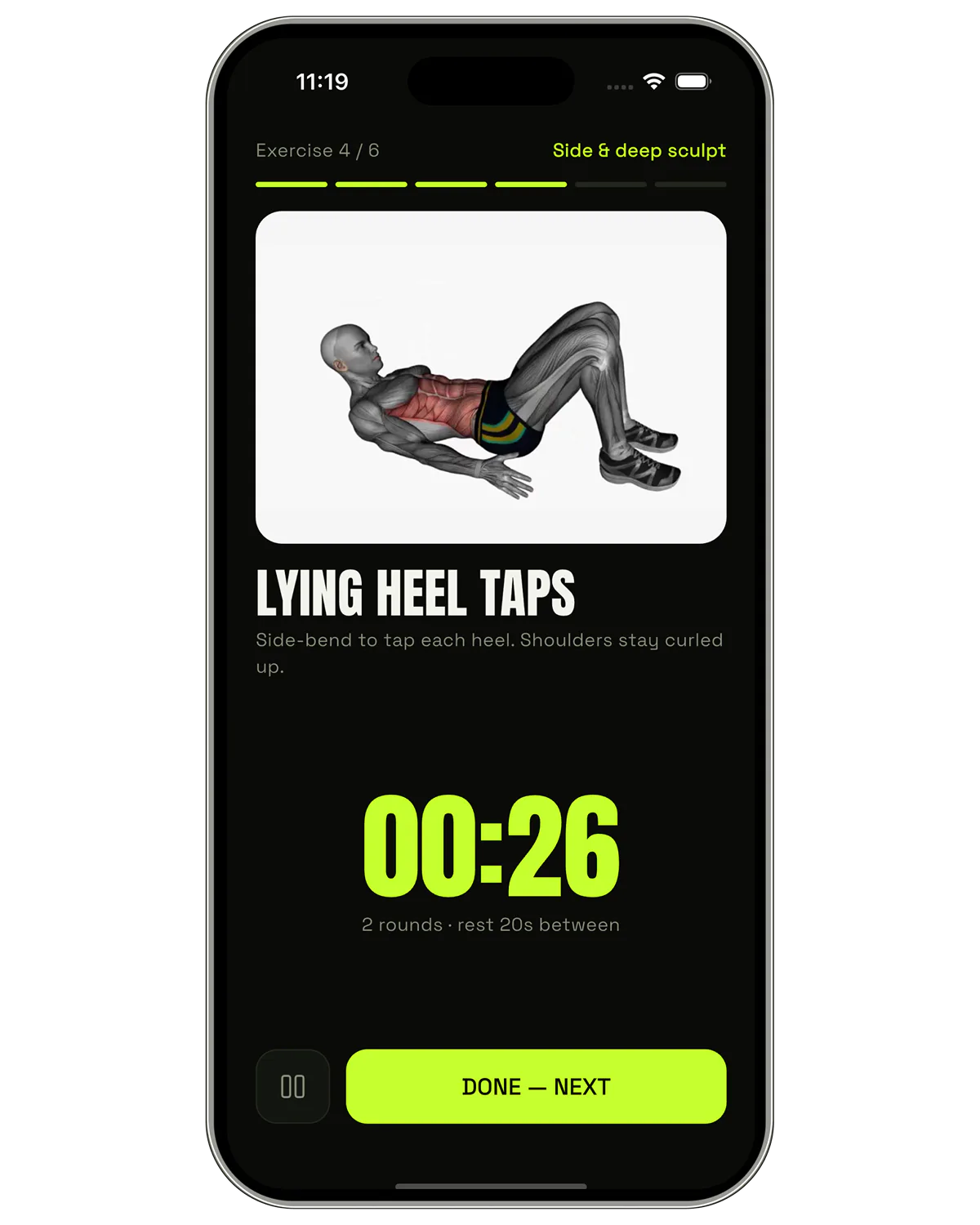
Six exercises, two rounds, about ten minutes on the floor — timed work and rest, no equipment, no gym.
See how it works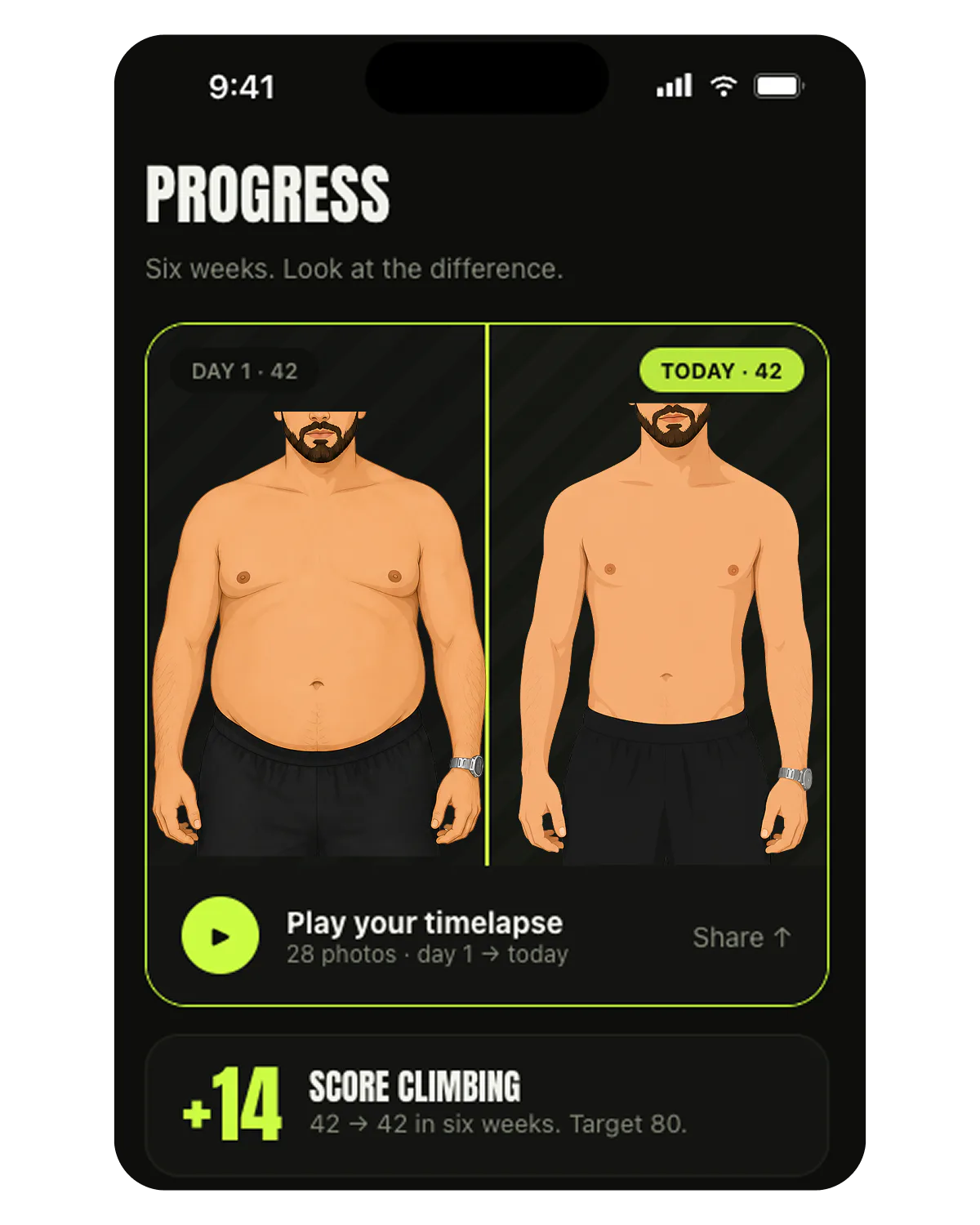
One photo after each workout, day 1 to today, in one swipe — stored on your phone and uploaded nowhere.
See how it works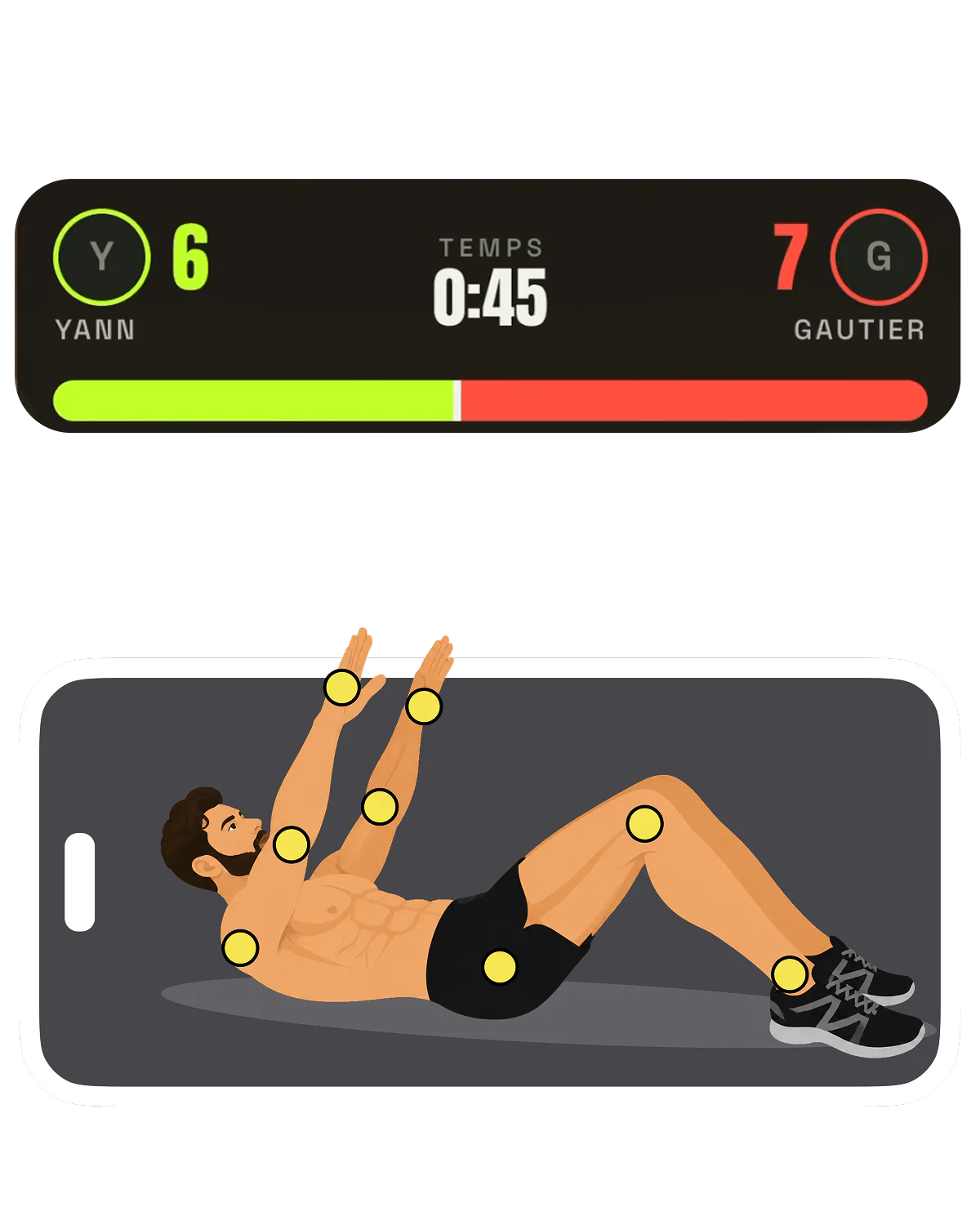
Max crunches in 60 seconds, counted by the camera and not by you — half reps are rejected, and the top 100 board says where you stand.
See how it worksAbsly estimates how visible your abdominal definition is from a photo. It is not a body-fat measurement, it is not a medical device, and it is not a substitute for advice from a doctor or a registered dietitian.