The 5-Minute Ab Workout
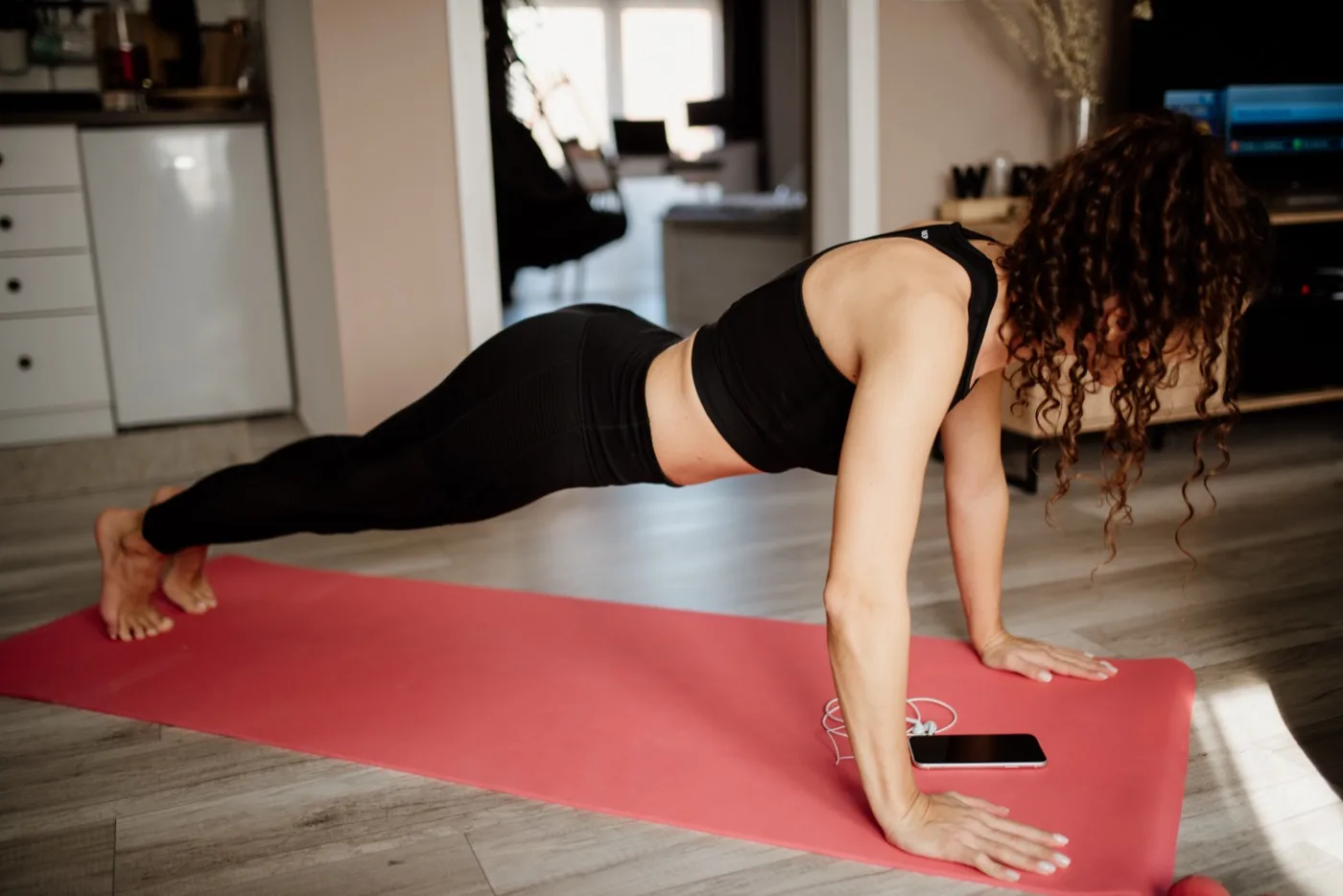
Five minutes is enough to train the abdominal muscles and nowhere near enough to make them visible. Those are two different jobs, and only one of them happens in a session. Below: a five-minute block with a pass/fail standard on each move, why the standard matters more than the clock, and what five minutes will never do no matter how many days you stack.
The session
Four moves, 60 seconds each, 20 seconds to change position. Five minutes on the clock.
| # | Move | Time | You passed if |
|---|---|---|---|
| 1 | Dead bug, alternating | 60 s | Lower back stays in contact with the floor for every rep |
| 2 | Hollow body hold | 60 s | You hold 30 s unbroken before the first reset |
| 3 | Side plank, 30 s per side | 60 s | Hips stay stacked, no sag, both sides equal |
| 4 | Reverse crunch, slow | 60 s | 12 controlled reps, no swing, hips lifted by the abs not momentum |
If you fail a standard, that is the session’s information. Repeat the same four next time rather than adding a fifth.
Absly runs the same format one size up: a ten-minute daily session of six exercises done twice, timed, with nothing to buy.
Why five minutes works at all
Two reasons, and neither is motivational.
The abdominals are a small muscle group doing low-load work. They recover in roughly 24 to 48 hours after bodyweight training, which means short and frequent suits them better than long and rare. The federal activity guidelines ask for muscle-strengthening work twice a week per muscle group; four five-minute blocks clear that comfortably.
And the limiting factor in a short session is tension, not duration. A minute of a genuine hollow hold with the lower back pinned is harder than ten minutes of half-attention crunches. Five minutes forces the density that a twenty-minute circuit lets you avoid.
That is the honest case for the format. Here is the honest limit.
What five minutes will not do
It will not reveal your abs. Visibility is decided by the layer of fat over the muscle, which sits at roughly 10 to 12 percent body fat for men and 16 to 20 percent for women — the full visibility ladder is here.
This is not opinion. Vispute and colleagues ran six weeks of abdominal training, five days a week, seven exercises per session, against a control group. Abdominal endurance improved. Body fat did not change. Abdominal fat did not change. That study used far more than five minutes a day and still moved nothing on the visibility side.
So the five-minute block is a muscle-building tool. Treat it as one and it works. Expect it to strip fat and you will quit in week three, correctly concluding that it did not do what you were promised.
The standards are the whole method
Most five-minute ab workouts you will find are a list of moves and a timer. That is the part that does not work — not because the moves are wrong, but because nothing tells you whether the minute counted.
A standard converts a minute into a measurement:
- Lower back in contact with the floor. The moment it lifts on a dead bug or a leg lower, the hip flexors have taken over and your abs are along for the ride.
- A hold time you write down. Thirty seconds of hollow body is an entry standard. Forty-five is solid. If the number does not climb across four weeks, the session is too easy or you are too fatigued.
- Equal sides. Side plank exposes asymmetry the mirror hides. If one side gives out fifteen seconds early, that is information about your bracing, not about your effort.

Without a standard, every session feels the same and you have no way to know whether eight weeks did anything.
How to schedule it
Three or four blocks a week is the useful range — the reasoning is in how often to train abs. Five minutes daily is fine too, and lands in roughly the same weekly total.
No floor available — hotel room, sore back, a mat you did not pack? Run the standing block instead. It is weaker on direct loading and identical on schedule.
If you go daily, alternate the emphasis: two days on holds and anti-extension work, two on rotation and leg-driven moves, and treat the remaining days as light. What you should not do is repeat a maximal effort on the same pattern seven days running and expect the hold time to climb. It will not.
How to progress without adding time
The point of a five-minute block is that it stays five minutes. Add difficulty, not duration:
- Lengthen the lever. Bent-knee dead bug becomes straight-leg. Tucked hollow hold becomes extended.
- Slow the tempo. A four-second lower on the reverse crunch changes the movement more than five extra reps.
- Shorten the rest. Cut the 20-second transitions to 10.
- Raise the standard. Thirty seconds of hollow becomes forty-five, then sixty.
When all four are exhausted, that is the moment to move to a longer session — not before.
Measuring whether it worked
Run the block four times a week for four weeks, change nothing else, and check two things at day 28: your hollow hold time, and a 90-second scan taken in the same light at the same hour as day 0.
Hold time up and score flat means the muscle got stronger under an unchanged layer of fat. That is the expected result of a training-only block, and it tells you exactly where to work next.
Five minutes of training, 90 seconds of measuring.
Absly scores your core from one phone photo: 50 percent definition, 20 percent symmetry, 30 percent leanness. Definition tracks what the session builds. Leanness tracks the layer on top. Scan at day 0 and day 28 and you can see which one your five minutes actually moved.
Get Absly on the App Store iOS today, Android in progress.
Five minutes is not a compromise. It is the correct dose for a small muscle that recovers fast — as long as you stop asking it to do the job that belongs in the kitchen.
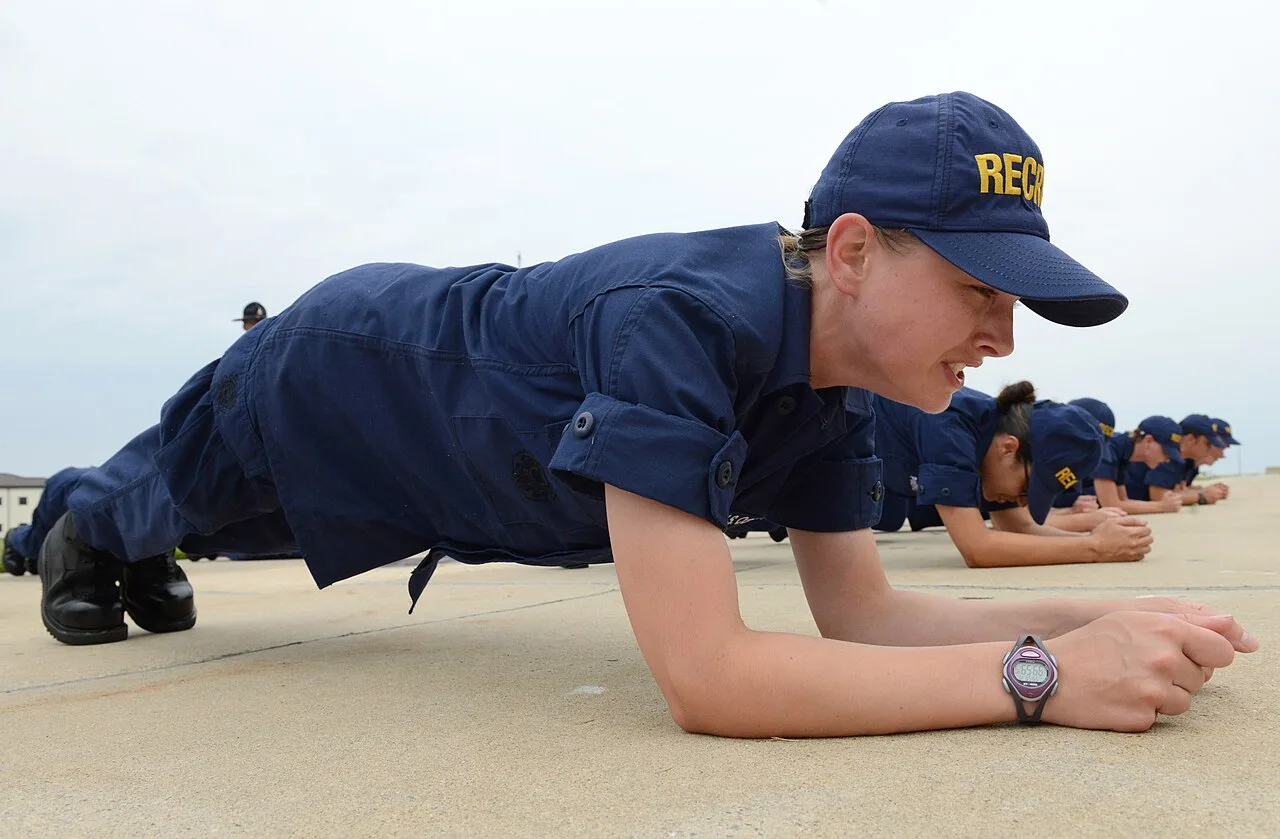
Image credits — Plank: Shixart1985, CC BY 2.0. Side plank: Tyler Read, CC BY 2.0. Both via Wikimedia Commons.
Frequently asked
Is a 5-minute ab workout enough?
For the muscle, yes, if the five minutes are dense and you hit a standard on each move. The abs are a small group that recovers in 24 to 48 hours, so short and frequent works. Five minutes will not uncover them — that is body fat, not session length.
Can you get abs from 5 minutes a day?
You can build them, not reveal them. Abs become visible around 10 to 12 percent body fat for men and 16 to 20 percent for women, and no five-minute session moves that. Train five minutes for thickness and strength, and change what you eat for visibility.
How many exercises fit in a 5-minute ab workout?
Four to five, at 45 to 60 seconds each with short transitions. Beyond five you are rushing setups and losing tension, which is the only thing that makes a short session work. Fewer moves held properly beat more moves done fast.
Is 5 minutes every day better than 15 minutes three times a week?
They are close, and the three-session version is slightly better because it allows real recovery. Both deliver roughly 35 to 45 weekly minutes. Pick whichever you will actually repeat for eight weeks — adherence beats the schedule on paper.
Sources
- Vispute SS et al. (2011). The effect of abdominal exercise on abdominal fat. J Strength Cond Res 25(9).
- Schoenfeld BJ, Ogborn D, Krieger JW (2016). Effects of resistance training frequency on muscle hypertrophy. Sports Med 46(11).
- U.S. Department of Health and Human Services (2018). Physical Activity Guidelines for Americans, 2nd edition.
- American College of Sports Medicine — resistance training guidance for healthy adults
Keep reading
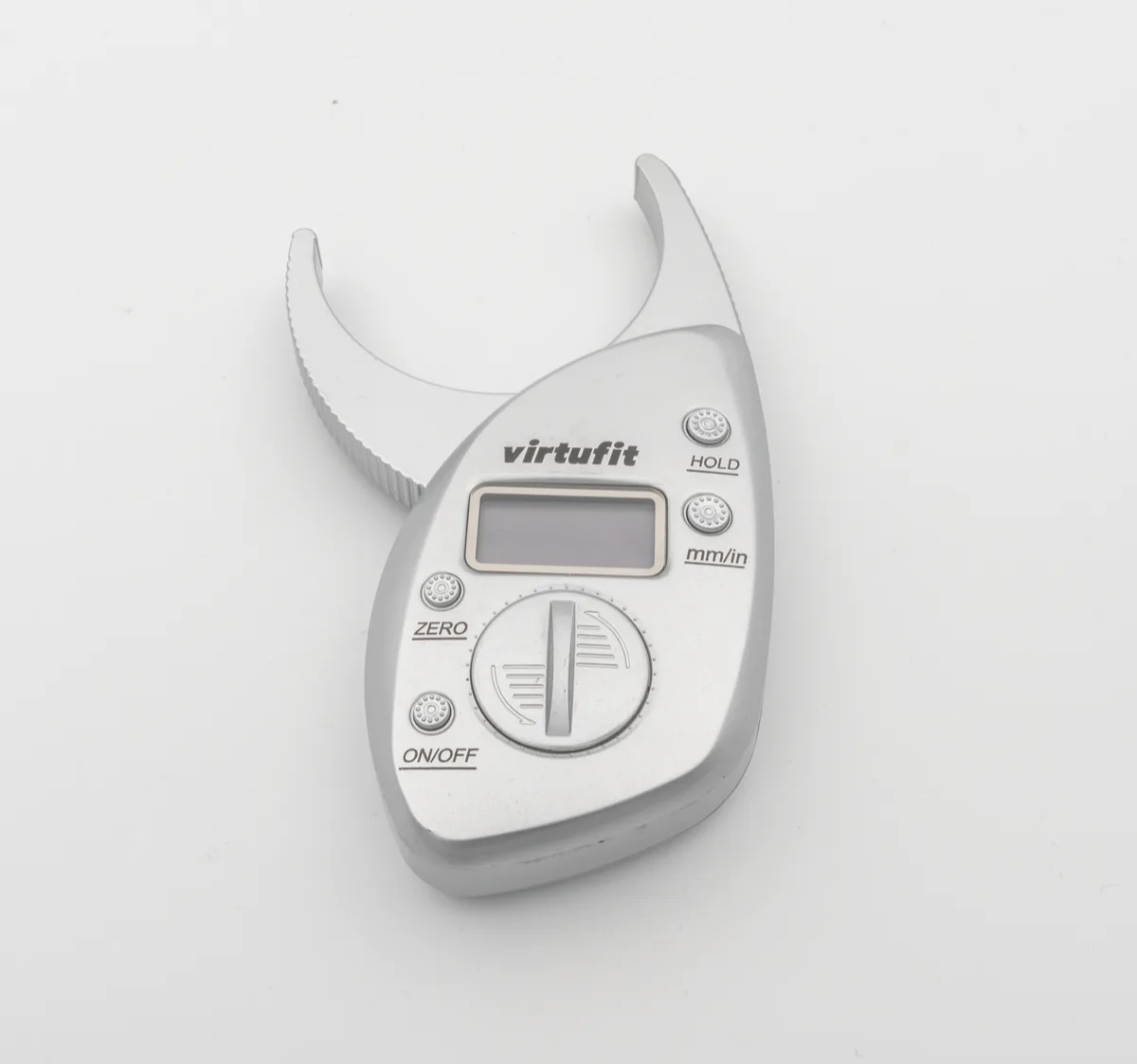
Skinfold Calipers: How Wrong Is the Pinch Test?
Calipers are cheap and repeatable in trained hands. The error lives in the hand, not the tool — here is how big it is and how to stop it moving.
How Often Should You Train Abs? Not Every Day
Abs recover in 24-48 hours. Three to four short sessions a week beat daily crunches — and here's the variable that actually makes them visible.

Standing Lower Ab Workout: What It Can and Can't Do
Standing ab work is real training with a real ceiling. Six moves with a pass/fail standard, and the honest answer on whether you can target the lower abs.
Absly is a training and self-assessment app, not a medical device. Its estimates are not a diagnosis. Talk to a healthcare professional before changing your diet or training if you have any health condition.