What Body Fat % Do You Need to See Abs? (Real Numbers)
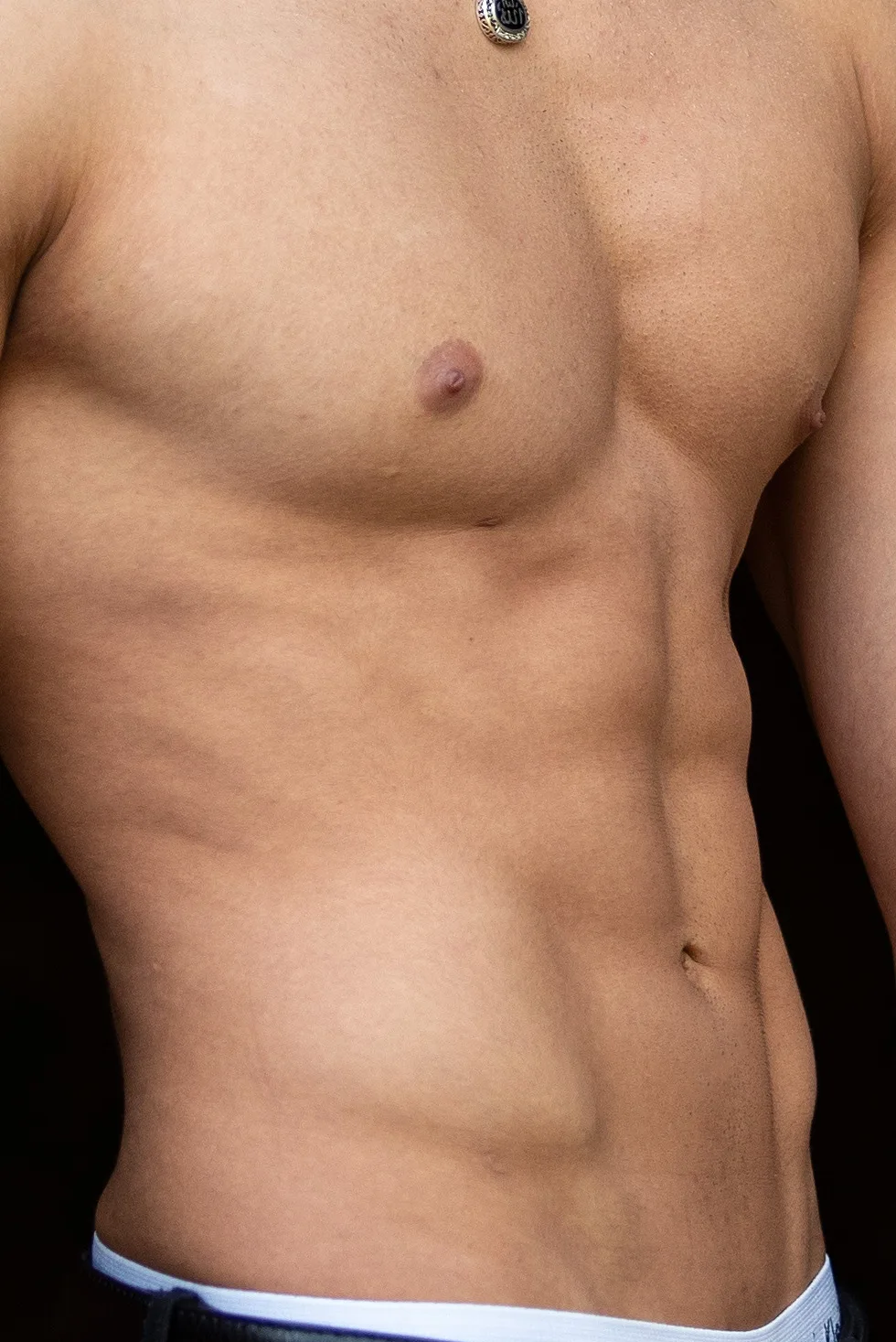
Most men see a defined six-pack between 10 and 12 percent body fat. Most women see one between 16 and 20 percent. The top two rows show up three to four points earlier than the bottom row. Those numbers are a starting range, not your number. Below, the ladder band by band, why two people at the same percentage look nothing alike, and how to find your own threshold with a camera instead of a caliper.
The short answer: 10-12% for men, 16-20% for women
A man with average fat distribution shows all six segments somewhere around 10 to 12 percent. A woman shows a defined midsection around 16 to 20 percent, and the gap is not a training failure — it is essential fat that women carry and men do not.
The top two rows arrive earlier, near 13 to 15 percent for men. That is why so many people feel stuck: they can see half the work and assume the other half needs more crunches. It usually needs fewer points of body fat.
That range answers the question. What it cannot tell you is where you sit inside it. Absly measures that in a 90-second phone scan and returns one number, the Abs Score.
Why the same body fat percentage looks different on two people
Put two men at 12 percent side by side. One has a sharp six-pack. The other has a flat stomach and a faint outline. Neither is lying about the number. Three things move the threshold.
Subcutaneous fat distribution
Body fat percentage is a whole-body figure. It says nothing about where the fat sits. Some people store it on the hips and thighs and carry a thin layer over the stomach; they show definition several points early. Others store it below the navel first and lose it there last. Same percentage, different picture.
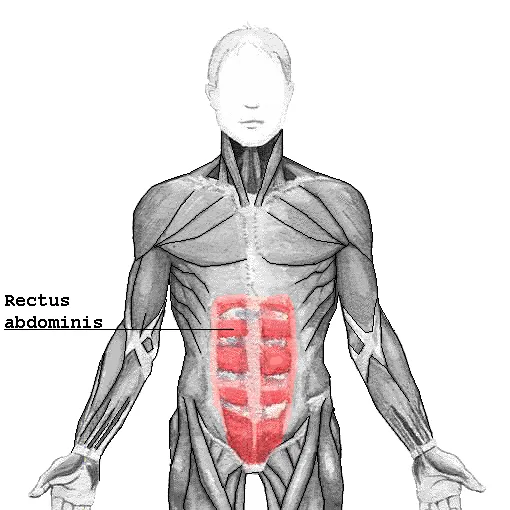
Rectus abdominis thickness and tendon insertions
The six-pack look comes from three bands of tendon crossing one flat sheet of muscle. The bands are fixed at birth. If yours are shallow, the segments stay soft-edged even at low body fat. If the sheet itself is thin from little training, there is nothing to push through the skin, so the stomach reads flat rather than defined.
Muscle thickness you can change. Insertions you cannot. Anyone selling you a lower-ab exercise that evens out crooked segments is selling you something.
Water retention, sodium, and the day-to-day swing
You hold a different amount of water on Tuesday morning than on Saturday night. A salty meal, a hard session, poor sleep, a menstrual cycle — each can blur or sharpen the outline within a day, with no change in fat at all. This is why progress photos taken at random times are worthless, and why the fix is a fixed protocol.
The visibility ladder: what shows at each band
| Body fat (men) | What you see |
|---|---|
| 20% and above | No definition. A flat stomach at best. |
| 15-18% | Top two rows, under direct light only. |
| 12-14% | Four segments, obliques starting to appear. |
| 10-11% | Full six, bottom row included. |
| Under 9% | Stage lean. Held for days, not months. |
20% and above: no definition
At this level the muscle can be strong and still invisible. Training adds thickness you will see later — a five-minute floor block or a standing session both build it. Neither shortens the queue.
15-18%: the top two rows
Definition appears under a ceiling light and vanishes in flat daylight. Most people first notice it in a gym mirror after a session and conclude the session did it. The pump did it.
12-14%: four visible, obliques appearing
The outline holds in normal light. The lower row is still covered. This is where most men stall, because the last points are the slowest.
10-11%: the full six
Bottom row included, visible without special lighting. For most men this is the honest target and it is maintainable with steady habits.
Under 9%: stage lean, not maintainable
Competitors hold it for a weekend. Below that sits essential fat, near 3 to 5 percent, and going near it costs sleep, mood and hormones. Treat single digits as a peak, not a home.
Women: why the threshold is 6-8 points higher, and not negotiable
Women carry more essential fat — roughly 10 to 13 percent, against 3 to 5 percent for men. It sits in the breasts, hips and around the organs, and it supports hormone production and menstrual function. It is not spare.
So a woman at 16 to 20 percent is at the same visual point as a man at 10 to 12. Chasing a man’s number is not discipline; it is a route to lost periods, poor bone density and a stalled metabolism. Below roughly 15 percent, many women stop cycling.
If you are a woman with a visible midsection at 18 percent, you are already lean. The next four points are the expensive ones, and they buy very little.
How to estimate your own number without a caliper
You do not need a device. You need the same conditions twice. Here is the protocol I have run on myself every week for a year.
1. Fix the photo. Same room, same light source, same distance, same pose, arms down, no bracing. First thing in the morning, before eating or drinking. Take it on the same weekday every time.
2. Read it against the ladder. Compare the photo — not the mirror — to the bands above. The mirror gives you a moving target because you unconsciously find the angle that flatters. A photo does not negotiate.
3. Repeat at 14 days. One reading is noise. Two readings under identical conditions give you a direction, and direction is the only thing worth acting on.
That gets you an estimate. What it does not get you is a number you can compare month to month without arguing with yourself about whether the light was the same.
You have the estimate. Now take the measurement.
Absly scans your core from one phone photo in 90 seconds and returns an Abs Score out of 100. Thirty percent of that score is leanness — not a body fat percentage, a repeatable indicator that moves when you do. Scan again in two weeks and the two scores are directly comparable.
Get Absly on the App Store iOS today, Android in progress.
Why the number from your smart scale is probably wrong
Bathroom scales that report body fat send a small current through your legs and estimate composition from the resistance. The method is sound in a lab with controlled hydration. Standing on tiles at 7pm after a coffee, it is not.
Consumer scales commonly land 4 to 8 percentage points away from a DEXA reading, and the error is not a fixed offset you can subtract — it moves with your hydration, your last meal and the time of day. A scale that says 18 percent on Monday and 14 percent on Thursday has not measured four points of fat loss. It has measured a glass of water.
Use it for direction across six weeks if you like, always at the same hour. Never use a single reading as a fact about your body. A skinfold caliper is the cheap step up — direct tissue measurement rather than a guess from resistance — though it carries its own margin.
What to track instead of chasing a percentage
A percentage is a poor target because you cannot measure it accurately at home and you cannot control it directly. Track things you can:
- Waist at the navel, same time, same tape tension, weekly. Blunt and reliable.
- Weight as a seven-day average, not a daily figure. Daily weight is mostly water.
- A hold time. Hollow body hold with the lower back flat on the floor, timed. It tells you the muscle is getting stronger while the fat layer is still in the way. Three or four sessions a week is enough to move it — here is how often to train abs, and why daily is not better.
- One photo per session, same conditions, so twelve weeks from now you have evidence instead of a memory. Absly plays them back as a day-1-to-today timelapse, stored on the phone itself.
- A repeatable score. The point of the Abs Score is that it removes your judgment from the reading — the scan takes 90 seconds and runs the same way every time.
Body fat percentage is the thing you infer at the end. It is not the dial you turn.
What body fat percentage is NOT
The limits, stated plainly.
A body fat percentage is not a health score. Two people at 14 percent can have very different blood pressure, blood sugar and fitness.
It is not a fixed threshold for abs. The visibility bands above are population averages. Yours can sit two or three points either side of them.
And Absly does not measure body fat percentage. It scores what a camera can actually see — definition, symmetry and leanness — with a published formula: 50 percent definition, 20 percent symmetry, 30 percent leanness. There is no clinical validation and no claimed correlation with DEXA, because we have not run that study. It is not a medical device. What it gives you is a number computed the same way every time.
Image credits — Torso: Oliver Seitz, public domain. Rectus abdominis diagram: Nikai, CC BY-SA 3.0. Both via Wikimedia Commons.
Frequently asked
What body fat percentage do you need to see abs?
Most men see a defined six-pack between 10 and 12 percent body fat, most women between 16 and 20 percent. The top two rows usually appear 3 to 4 points earlier. The exact threshold is personal: fat distribution and muscle thickness move it by several points either way.
Can you see abs at 15% body fat?
Usually the top two rows only. At 15 percent most men show upper definition under direct light and lose it in flat light. A full six-pack, lower row included, typically needs 10 to 12 percent. Women at 15 percent are already below the healthy floor for many.
Is 8% body fat safe?
Eight percent is below the maintainable range for most men and close to essential fat, which sits near 3 to 5 percent. Competitors hold it for days, not months. Sustained very low body fat is associated with hormonal and mood disruption. Treat it as a peak, not a target.
How accurate are smart scales for body fat?
Consumer bioelectrical impedance scales commonly report errors of 4 to 8 percentage points against DEXA, and they are strongly affected by hydration, food and time of day. They are useful for direction over weeks, useless for a single absolute reading.
Sources
Keep reading
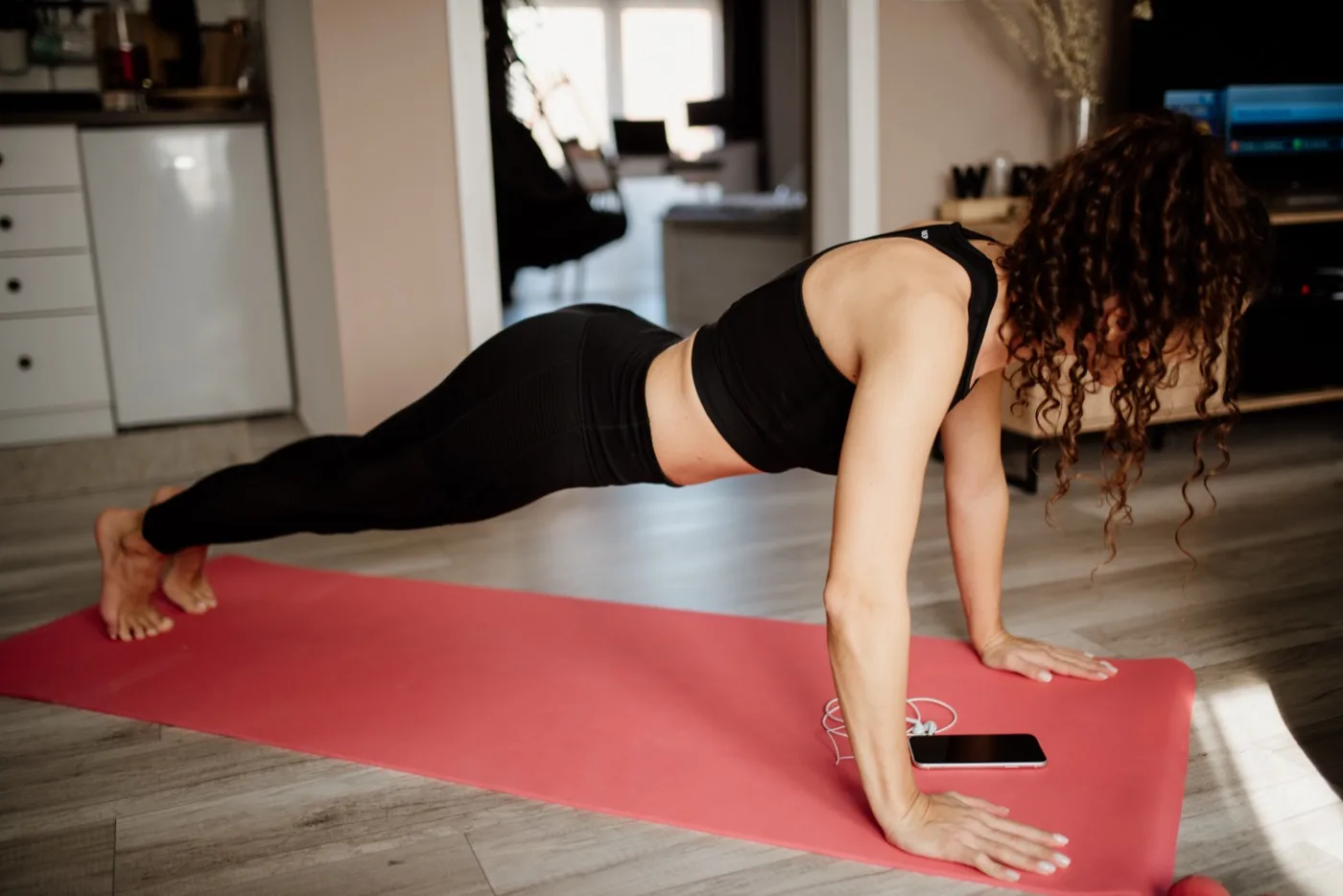
The 5-Minute Ab Workout
Five minutes is enough to train the muscle and not enough to reveal it. Here is the session, with a pass/fail standard on every move, and the honest ceiling.
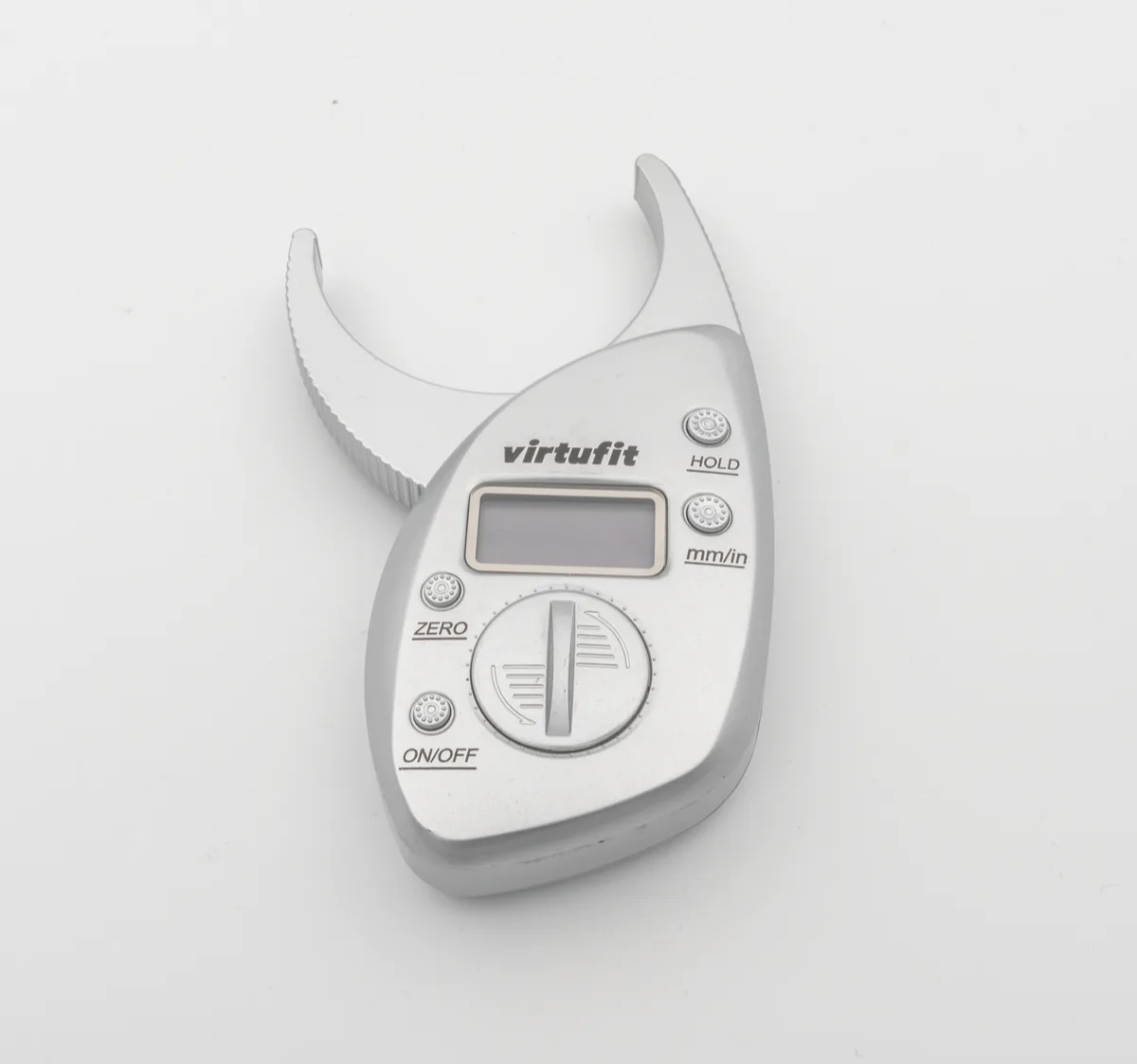
Skinfold Calipers: How Wrong Is the Pinch Test?
Calipers are cheap and repeatable in trained hands. The error lives in the hand, not the tool — here is how big it is and how to stop it moving.
How Often Should You Train Abs? Not Every Day
Abs recover in 24-48 hours. Three to four short sessions a week beat daily crunches — and here's the variable that actually makes them visible.
Absly is a training and self-assessment app, not a medical device. Its estimates are not a diagnosis. Talk to a healthcare professional before changing your diet or training if you have any health condition.