How Often Should You Train Abs? Not Every Day
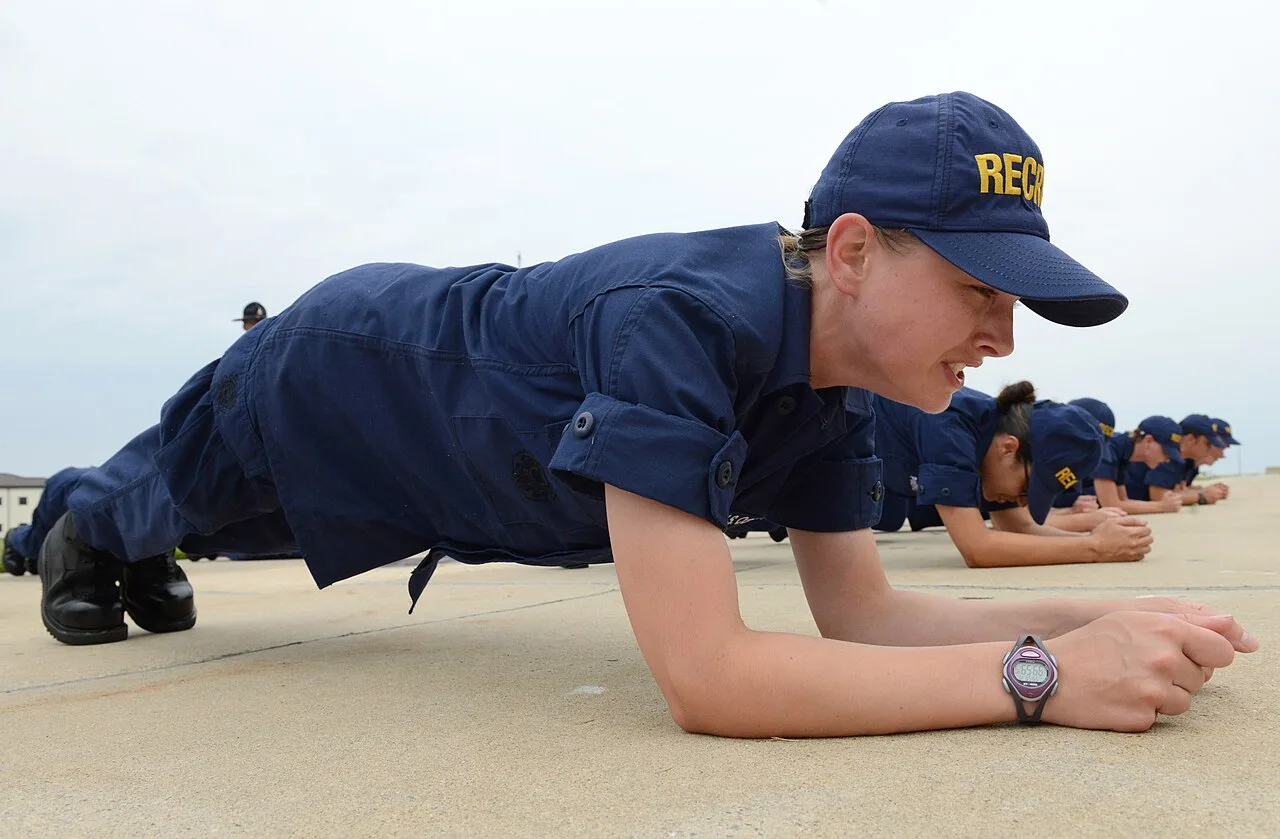
Train abs three to four times a week, 10 to 15 minutes a session. More than that adds very little, because the abdominals recover in roughly 24 to 48 hours after bodyweight work. Frequency is not what keeps your abs hidden. Below: how fast they actually recover, a table by training age, and the four-week test that settles the question for your own body.
The short answer: 3 to 4 sessions a week, 10 to 15 minutes
Two to four exercises. Three sets each. Real tension, slow reps, no momentum. Do that three or four times a week and you have covered the stimulus for the muscle. The shortest version that still counts is the five-minute block, with a pass standard on every move.
The federal Physical Activity Guidelines ask for muscle-strengthening work on two or more days a week for every major muscle group, and the American College of Sports Medicine puts the range at two to three days. Abs are not an exception. They are a small muscle that recovers fast, so you can sit at the top of the range without much cost — but you cannot buy results by going past it.
That is the training answer. Whether they show is a different question, and it has a number attached. Absly scans your core in 90 seconds and returns one: the Abs Score.
Can you train abs every day? Technically yes, usefully no
Nothing breaks if you do ab work seven days a week. The abdominals handle daily low-load contraction — they hold your posture all day already.
The problem is what you give up. A fifth, sixth and seventh session add almost nothing to a muscle that has already recovered and been stimulated four times. Meanwhile you spend 70 extra minutes a week on the one variable that was never the bottleneck, and you skip the sleep, the walking and the kitchen habits that actually move body fat.
Daily crunches are not dangerous. They are a way of feeling busy about the wrong thing.
How fast do abs actually recover?
24 to 48 hours for low-load, bodyweight work
Planks, dead bugs, crunches, bird dogs. Little eccentric loading, little muscle damage, short recovery. Train Monday, train again Wednesday, and the tissue is ready.
The honest caveat: almost no study measures abdominal recovery directly. This 24-to-48-hour window comes from what we know about small muscle groups under low load, not from an ab-specific trial. Treat it as a working rule, not a law.
48 to 72 hours after heavy loaded or long-lever work
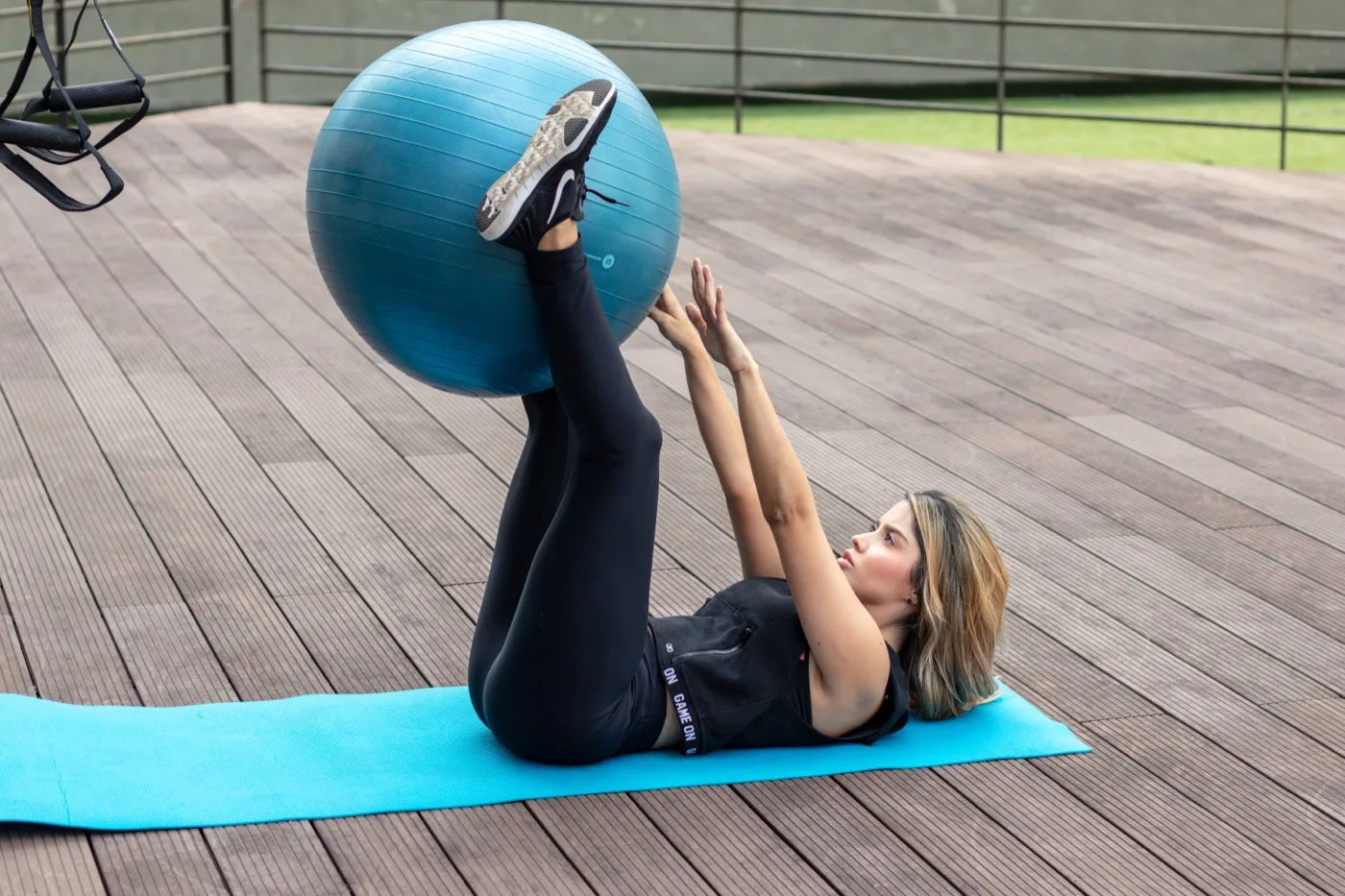
Hanging leg raises, weighted cable crunches, ab wheel rollouts, slow leg lowering with straight legs. The lever is long, the eccentric phase is loaded, and the damage is real. Leave two to three days before you hit the same pattern again.
The soreness test is a bad signal
Most people gauge recovery by how sore they feel. It does not work. Nosaka and colleagues showed that delayed-onset soreness does not track the actual magnitude of muscle damage — you can be wrecked without soreness, and sore without damage.
Use performance instead. If your hollow body hold time is at or above last session’s, you have recovered. If it dropped by more than a few seconds, you have not.
The frequency table by training age
| Level | Sessions/week | Length | Structure |
|---|---|---|---|
| Beginner | 3 | 8 min | Whole core, one session type, no load |
| Intermediate | 4 | 12 min | Split by region: two anti-extension days, two rotation/lower days |
| Advanced | 4-5 | 15 min | One heavy loaded day, the rest bodyweight |
Absly’s 8-week abs plan works from the same numbers: you pick three, four, five or seven sessions a week, and the three phases stretch across 4, 8 or 12 weeks.
Beginner: 3 a week, 8 minutes
You are learning to brace. Repeat the same short session — dead bug, hollow hold, side plank — until the standards are clean. Adding a fourth day before you can hold a flat lower back just adds bad reps.
Intermediate: 4 a week, 12 minutes
Split the week. Two sessions built on holds and anti-extension, two on rotation and leg-driven work. Same total time, less redundancy. When the floor is out — small room, hard surface, a back that objects to lying flat — a standing session fills the same slot on the same schedule.
Advanced: 4 to 5 a week, 15 minutes
One day with real load — weighted crunch or hanging leg raise — and 48 to 72 hours clear on either side of it. The rest stays bodyweight and short.
Why 100 crunches a day changes almost nothing
There is a direct experiment on this. Vispute and colleagues put adults through six weeks of abdominal exercise, five days a week, seven exercises a session, and compared them to a control group that did none. Abdominal endurance improved. Body fat percentage did not change. Abdominal fat did not change.
Spot reduction does not work, and it has been tested more than once: a separate trial trained one leg for twelve weeks and found the fat that came off did not come off the trained limb preferentially. The body draws fat from where it wants to.
So 100 crunches a day buys you a stronger, thicker muscle sitting under exactly the same layer of fat as before. That is not nothing — thickness is what makes definition sharp once the layer thins — but it will not uncover anything on its own.
What actually decides whether they show
Two variables, in this order.
Body fat. Most men see a full six-pack between 10 and 12 percent body fat, most women between 16 and 20 percent. That is set in the kitchen over months, not in a 10-minute session. If you want the numbers band by band, read what body fat percentage you need to see abs.
Muscle thickness. This is the part training owns. A thicker rectus abdominis pushes further through the skin, so it reads at a slightly higher body fat than a thin one. Three to four quality sessions a week build it. Seven do not build it faster.
Frequency shapes the muscle. Leanness reveals it. Almost everyone stuck at “I train abs every day and see nothing” has been pulling hard on the wrong lever.

Stop guessing which lever moved.
Absly scores your core from one phone photo: 50 percent definition, 20 percent symmetry, 30 percent leanness. Definition tracks the muscle you are building. Leanness tracks the layer on top. Scan at the start of a four-week block and again at the end, and you can see which one actually changed.
Get Absly on the App Store iOS today, Android in progress.
Signs you are training abs too often
- Lower-back tightness that lasts into the next day. Usually hip flexors doing the work your abs should be doing.
- A stalled hold time. Four weeks of training and your hollow hold has not moved a second? You are accumulating fatigue, not adaptation.
- Neck strain at every session. A sign you are chasing reps instead of tension.
- Sessions creeping past 20 minutes. Past that point the set stops being ab training and becomes low-grade cardio with a sore neck.
The fix is never “push through”. Drop to three sessions for two weeks and watch the hold time come back.
A 4-week frequency test you can run on yourself
Stop debating frequency and measure it. This is the protocol I ran on myself, scanning at day 0 and day 28.
- Day 0. Scan — 90 seconds of camera time. Time a hollow body hold with your lower back flat on the floor. Write both down.
- Weeks 1-4. Four sessions a week, 12 minutes, same six movements. Nothing else changes — same food, same steps, same sleep window. One variable at a time or the test tells you nothing.
- Day 28. Scan again in the same light, same time of day. Time the hold again.
- Read it. Definition up and leanness flat means the training worked and the diet did not move. Both flat means four sessions was not the constraint. Hold time up but the score unchanged means you got stronger under an unchanged layer of fat — expected, and the signal to go work on the kitchen.
Four weeks, two data points, one honest answer about your own body. That beats any frequency argument on the internet.
Image credits — Plank: U.S. Coast Guard, photo by Chief Warrant Officer Donnie Brzuska, public domain. Leg raise: PTPioneer, CC BY 2.0. Torso: Oliver Seitz, public domain. All via Wikimedia Commons.
Frequently asked
Can you work abs every day?
You can, but the return drops fast. The abs recover in roughly 24 to 48 hours after bodyweight work, so a fourth or fifth weekly session adds little. Three to four focused sessions of 10 to 15 minutes cover the stimulus. Daily crunches mainly cost you time.
How often should you train abs to see them?
Three to four times a week is enough for the muscle. Visibility is a different variable: abs show when body fat drops to roughly 10-12 percent for men and 16-20 percent for women. Training frequency builds the shape, it does not uncover it.
How long should an ab workout be?
Ten to fifteen minutes of focused work is enough at three to four sessions per week. Beyond twenty minutes, quality drops and the set turns into cardio. Two to four exercises, three sets each, with real tension beats a thirty-minute unfocused circuit.
Do abs need rest days?
Yes, like any muscle. Give at least 24 hours between sessions targeting the same region, and 48 hours after heavy loaded or long-lever work such as hanging leg raises. Persistent lower-back tightness or a stalled hold time is your signal to back off.
Sources
- Vispute SS et al. (2011). The effect of abdominal exercise on abdominal fat. J Strength Cond Res 25(9).
- Ramírez-Campillo R et al. (2013). Regional fat changes induced by localized muscle endurance resistance training. J Strength Cond Res 27(8).
- Schoenfeld BJ, Ogborn D, Krieger JW (2016). Effects of resistance training frequency on muscle hypertrophy: a systematic review and meta-analysis. Sports Med 46(11).
- Nosaka K, Newton M, Sacco P (2002). Delayed-onset muscle soreness does not reflect the magnitude of eccentric exercise-induced muscle damage. Scand J Med Sci Sports 12(6).
- U.S. Department of Health and Human Services (2018). Physical Activity Guidelines for Americans, 2nd edition.
- American College of Sports Medicine (2011). Position stand: quantity and quality of exercise for apparently healthy adults.
Keep reading
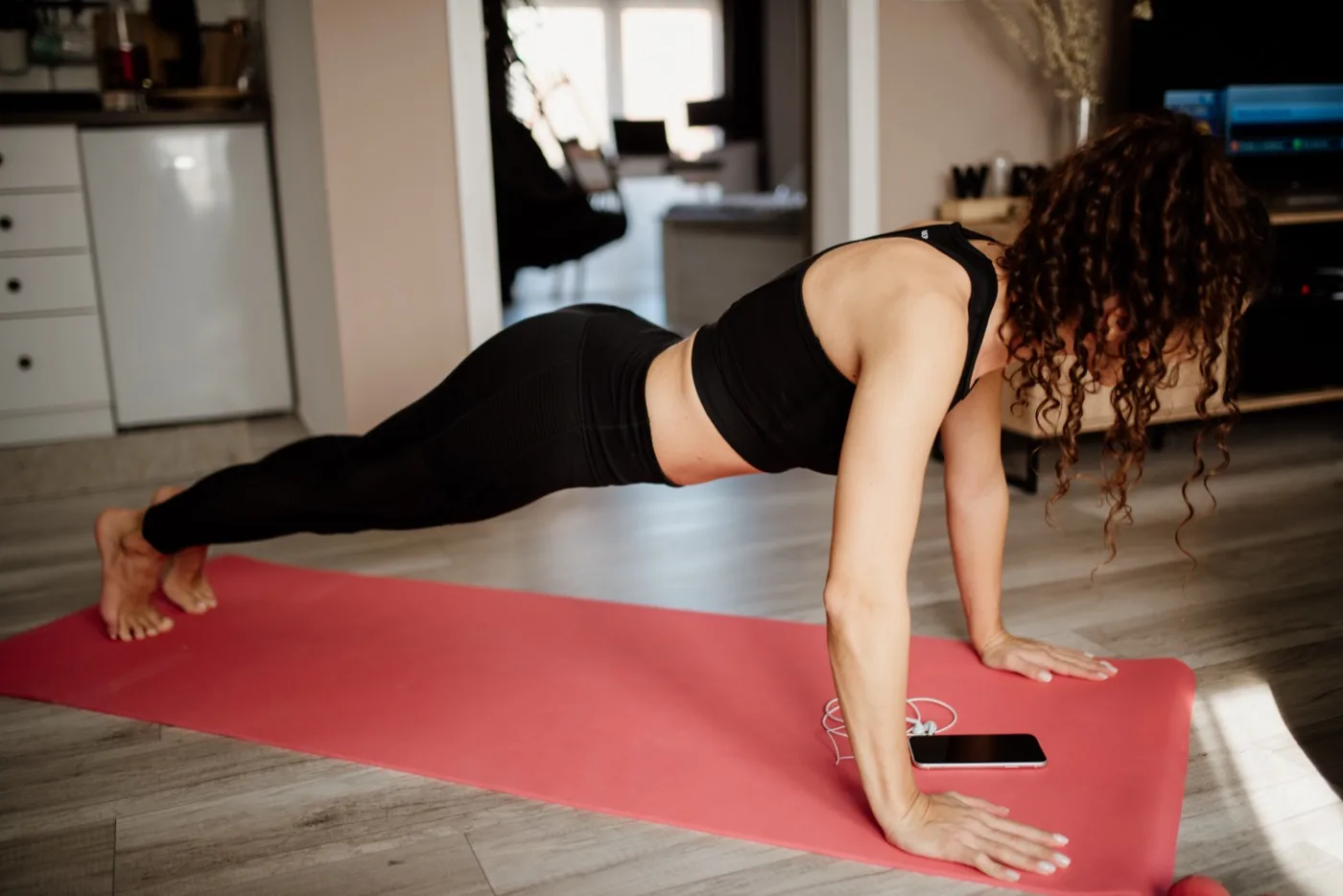
The 5-Minute Ab Workout
Five minutes is enough to train the muscle and not enough to reveal it. Here is the session, with a pass/fail standard on every move, and the honest ceiling.
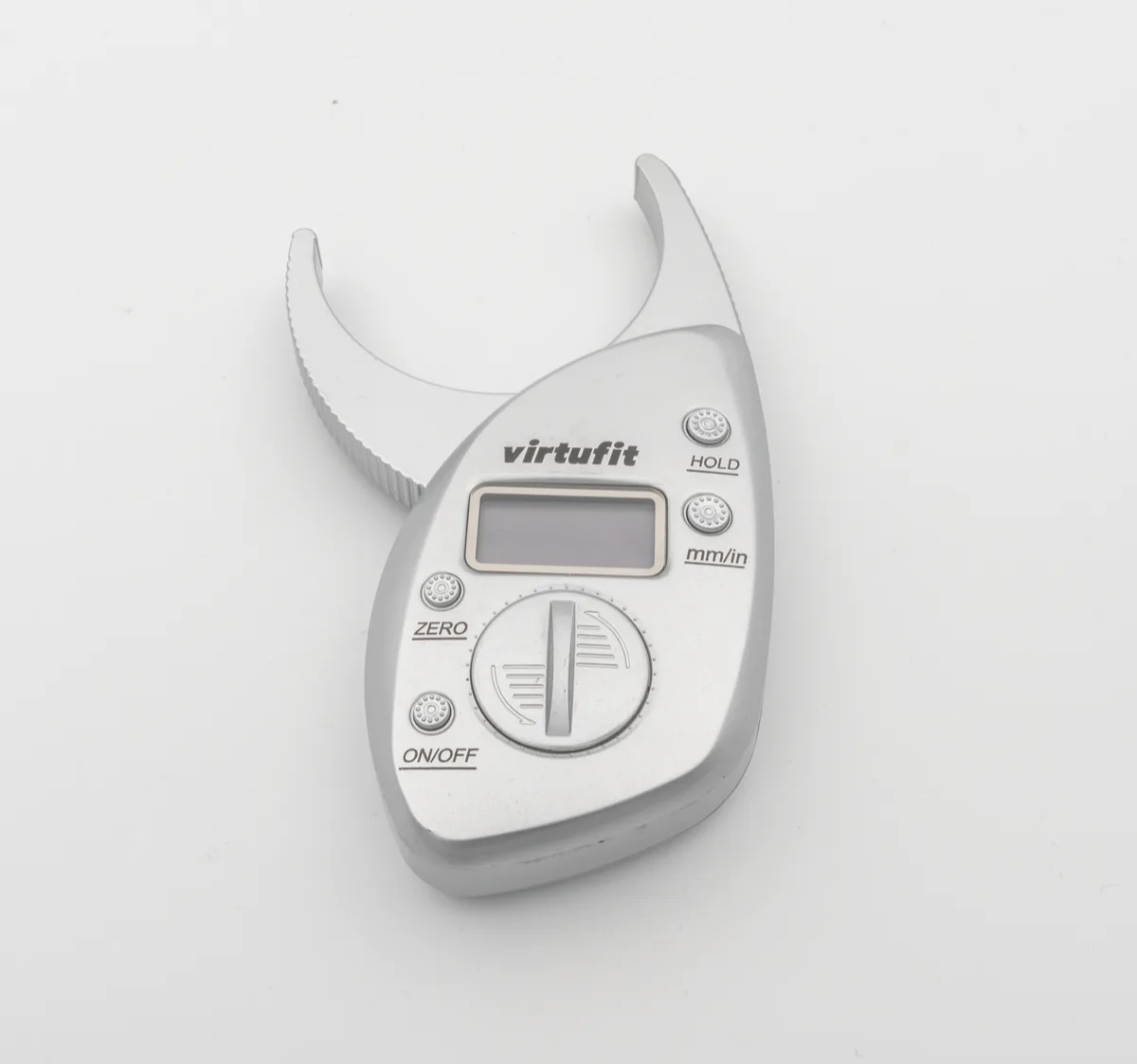
Skinfold Calipers: How Wrong Is the Pinch Test?
Calipers are cheap and repeatable in trained hands. The error lives in the hand, not the tool — here is how big it is and how to stop it moving.

Standing Lower Ab Workout: What It Can and Can't Do
Standing ab work is real training with a real ceiling. Six moves with a pass/fail standard, and the honest answer on whether you can target the lower abs.
Absly is a training and self-assessment app, not a medical device. Its estimates are not a diagnosis. Talk to a healthcare professional before changing your diet or training if you have any health condition.